
Commercial Auto Insurance in Chicago
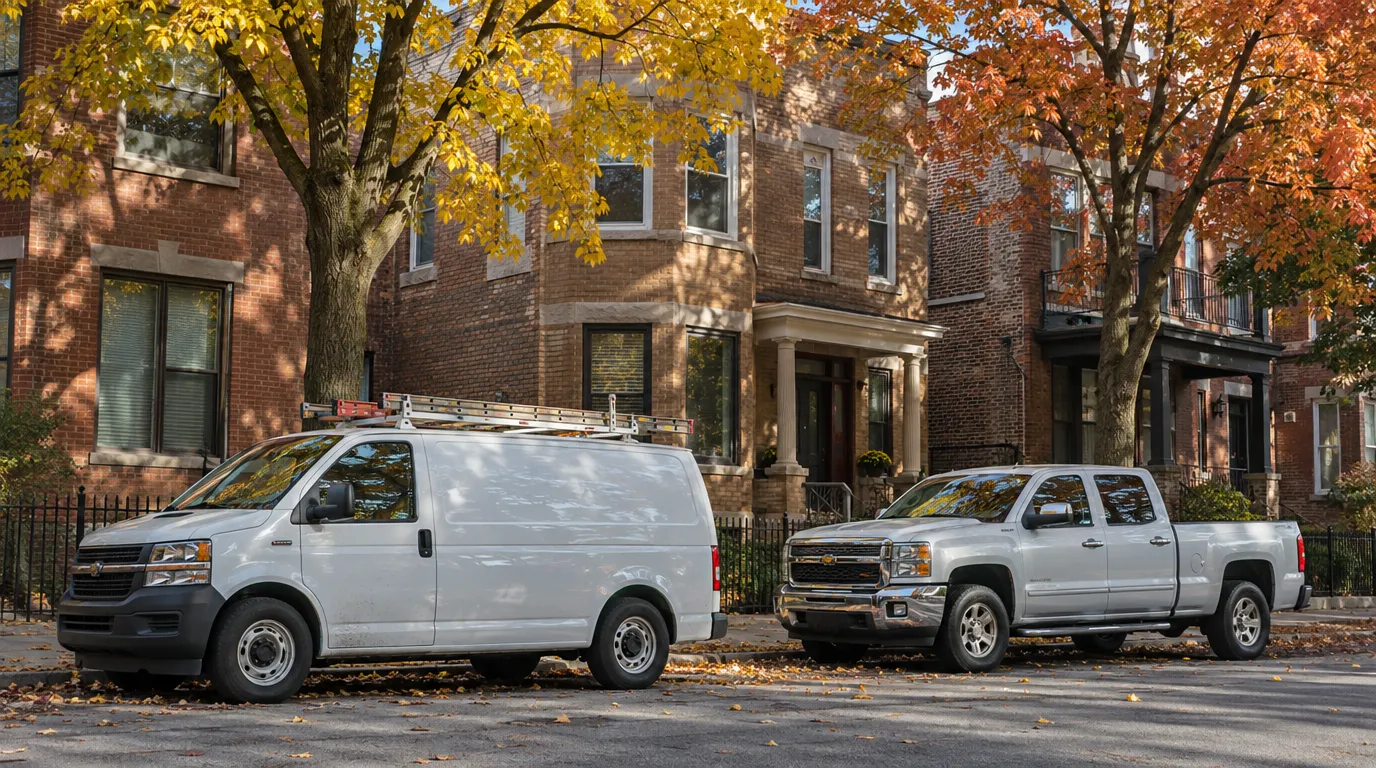
Commercial auto covers the vans, trucks, and cars your business owns or uses for work. Personal auto policies often exclude business use, so a work accident on the wrong policy can leave the business paying the claim.
Request a Commercial Auto QuoteWhat's Covered
What Commercial Auto Typically Covers
A commercial auto policy is built around the vehicles you list, the people who drive them, and how they are used. You choose which coverages apply to each vehicle.
Liability
Injuries and property damage your vehicles or drivers cause to others, plus legal defense. Business contracts often require a $1 million combined limit.
Physical Damage
Comprehensive and collision for your own vehicles: crashes, theft, vandalism, hail, and fallen trees, subject to a deductible.
Uninsured Motorist
Injuries to your drivers and passengers caused by an uninsured or hit-and-run driver. Illinois requires uninsured motorist coverage on auto policies.
Medical Payments
Medical bills for your driver and passengers after an accident, regardless of who was at fault, up to a set limit.
Common add-ons
Availability and terms vary by carrier and by the kind of vehicles you run.
Hired and non-owned auto
Liability when employees drive their own cars for work or you rent a vehicle. Their personal policy pays first, and this protects the business above it.
Rental reimbursement
Pays for a replacement vehicle while a covered vehicle is being repaired, so jobs and deliveries keep moving.
Towing and roadside
Towing and labor costs when a vehicle breaks down.
Gap coverage
Covers the difference between a vehicle's value and what you still owe on a loan or lease if it's totaled.
Additional insured and waivers
Extends coverage to clients or general contractors when a contract requires it.
What commercial auto does not cover
These need their own coverage.
- Tools, equipment, and inventory carried in the vehicle (inland marine or tools coverage)
- Injuries to your employees while driving (workers' compensation)
- Accidents away from the vehicle, like at a job site (general liability)
- Driving for rideshare or delivery apps on a personal vehicle (a rideshare endorsement)
- Mechanical breakdown and normal wear
- Vehicles and drivers not listed on the policy, depending on how it is written
Is It Right for You?
When You Need It, and What It Takes to Quote
When you likely need commercial auto
- The vehicle is titled or leased in the business's name
- You haul tools, equipment, or goods for work
- Employees drive company vehicles
- You make deliveries or carry people for a fee
- The vehicle is a box truck, heavy pickup, or has business signage
- A client contract asks for a commercial auto certificate
Personal vs. commercial auto
Personal auto usually covers commuting and some light business errands, but often excludes vehicles owned by a business and use like hauling equipment, deliveries, or carrying people for pay.
If you drive your own car for occasional client visits, your personal policy may be enough, with hired and non-owned auto protecting the business. If the vehicle is really a work vehicle, it belongs on a commercial policy. We'll help you tell which applies.
What helps us compare options
- Year, make, model, and VIN for each vehicle
- Who owns or leases each vehicle
- Drivers' names, dates of birth, and license numbers
- How vehicles are used and how far they travel
- Where vehicles are parked overnight
- Current policy and claims history
Illinois minimum liability limits of 25/50/20 apply to every vehicle, but they are far below what most businesses and contracts need. Trucks with interstate operating authority have federal filing requirements; tell us if your vehicles cross state lines for hire.
Related Coverage
Tools and equipment coverage
Protect tools and gear in the van, which commercial auto excludes.
General liability
Covers claims from your work and premises, away from the vehicle.
Workers' compensation
Covers employees injured while driving for work.
Commercial umbrella
Adds liability limits above your commercial auto policy.
Common Questions
Commercial Auto FAQ
Straight answers about when you need commercial auto, who it covers, and what it leaves out.
It depends on how you use it. Occasional client visits or errands are often covered by a personal auto policy. Hauling tools or goods, making deliveries, carrying people for pay, or using a vehicle titled to the business usually requires commercial auto. A personal policy may deny a claim for business use it excludes.
Illinois requires liability limits of at least $25,000 per person and $50,000 per accident for bodily injury and $20,000 for property damage, plus uninsured motorist coverage. Most businesses carry much higher limits, and many contracts require a $1 million combined limit.
Their personal auto policy pays first. If a claim exceeds their limits or their policy excludes the trip, the business can be sued. Hired and non-owned auto coverage protects the business in those situations. It does not cover damage to the employee's car.
Usually not. Commercial auto covers the vehicle and permanently attached equipment. Tools, equipment, and inventory you carry need inland marine or contractor's equipment coverage, which can often be added to a business policy.
Often, yes. Many carriers will write a personally titled vehicle used mainly for business on a commercial auto policy. The right choice depends on how the vehicle is titled and used, so we look at each vehicle before recommending a policy.
It depends on your vehicles and drivers, so we do not quote a typical range. Price is driven by the type and value of each vehicle, how and where it is used, the drivers' records, limits and deductibles, and claims history. We compare carriers once we have those details.
Request a Commercial Auto Quote
Tell us about your vehicles, drivers, and how they're used. We'll compare carriers, check whether hired and non-owned auto belongs in the program, and explain the options.