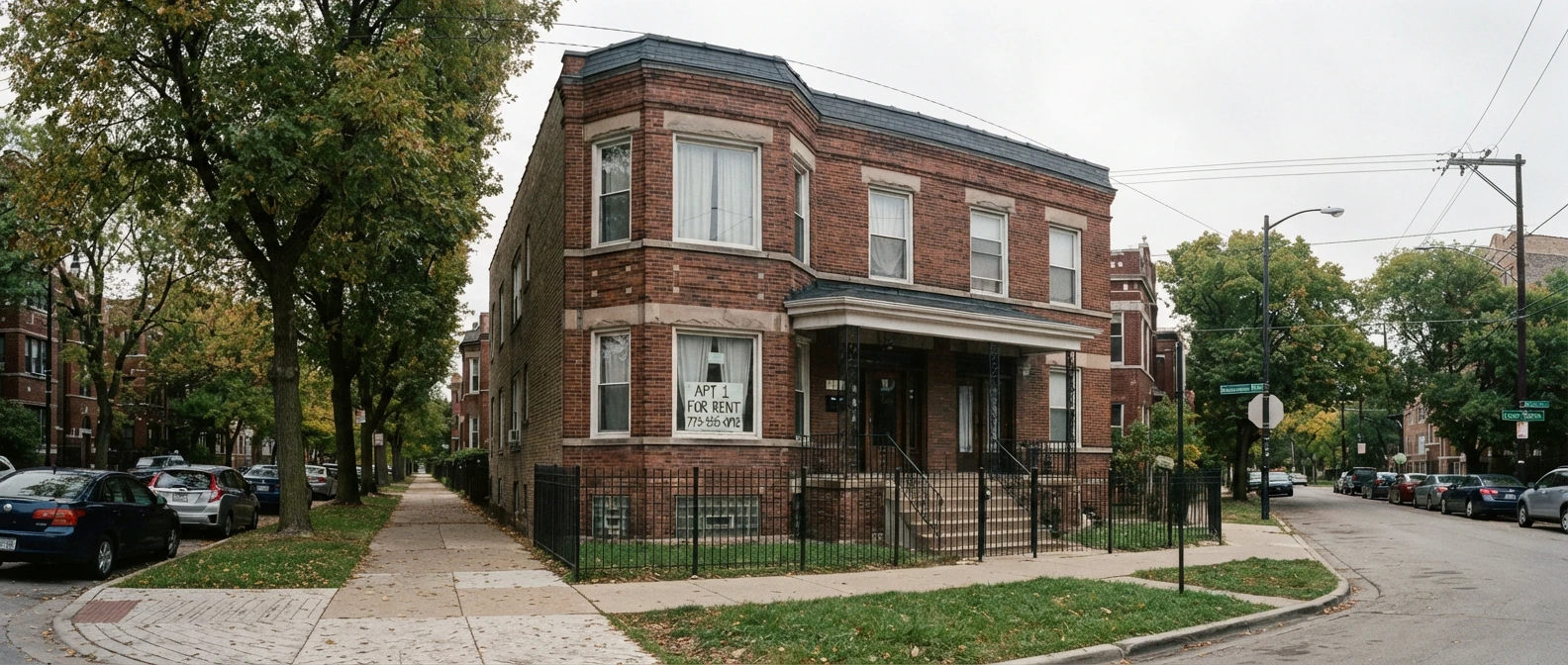
Chicago's two-flats, three-flats, graystones, and small multi-unit buildings are some of the most iconic investment properties in the country. But insuring them properly isn't the same as insuring a single-family home. A landlord policy is a different product, and the gaps between a homeowner policy and a rental property policy are exactly where small landlords lose the most money when something goes wrong.
Why a Standard Homeowners Policy Stops Working the Day You Rent
Once a property is no longer owner-occupied, a standard homeowners policy either excludes the building entirely or sharply limits the coverages that respond. Most carriers treat even a single rental unit as a commercial exposure. That means claims — even small ones — can be denied if the policy hasn't been replaced with the right form.
What Chicago Landlord Insurance Actually Covers
A properly built landlord policy for a Chicago-area rental property — usually written as a dwelling fire (DP-1 or DP-3) policy — bundles four critical coverages:
1. The Building (Dwelling Coverage)
The structure itself: roof, walls, floors, built-in appliances, attached structures like garages or porches. We size this to the replacement cost, not the market value or purchase price. In Chicago that distinction matters — brick-and-limestone three-flats have costed far more to rebuild per square foot than their assessed value suggests.
2. Loss of Rent / Fair Rental Value
If a covered loss (a fire, a hailstorm-damaged roof, a burst pipe) makes the unit uninhabable, this coverage pays the rent you would have collected — typically for up to 12 months. For a Logan Square or Pilsen three-flat with three units, even a modest monthly rent multiplied across the rebuild timeline can mean five figures in recoverable income.
3. Landlord Liability
The exposure most landlords undershoot. If a tenant or tenant's guest slips on un-shoveled stairs, is burned by a water-heater leak, or is injured by a railing that fails inspection, the landlord is on the hook. Liability limits of $100,000 are common in basic forms — and almost never enough in a jury-friendly venue like Cook County.
4. Optional Umbrella
A landlord umbrella policy extends liability limits above the base landlord policy — usually $1 million to $5 million for a relatively modest annual premium. For owners of two-flats, three-flats, or small multi-unit buildings, this is one of the highest-ROI coverages available.
The Chicago-Specific Coverage Gaps Worth Flagging
Sewer Backup and Sump Pump Discharge
Chicago's combined sewer system makes water backup a recurring event in many neighborhoods. A standard landlord policy excludes it by endorsement, then offers it back as a rider — usually with a sub-limit far lower than the building value. For low-lying or older buildings in River West, Bucktown, Humboldt Park, and parts of the South Side, we recommend water backup at limits sized to actual replacement cost, not a defaulted $5,000.
Vacancy and Unoccupied Buildings
Many small landlords carry a building between tenants for 30, 60, or 90 days. Standard landlord forms sharply limit or suspend coverage after a vacancy period — often 30 or 60 days. A vacant-property endorsement, or a structured transition plan, keeps the protection in place during turnover.
Aging Mechanical, Electrical, and Plumbing
Older two-flats and graystones often have legacy wiring, original copper supply lines, and boiler systems north of 20 years old. Few standard landlord forms offer equipment breakdown or service line coverage by default. We usually add both, especially for properties built before 1960.
Short-Term and Mid-Term Rentals
Airbnb, VRBO, and corporate-housing platforms aren't automatically covered under a traditional landlord policy. The exposure profile — higher turnover, strangers in the unit, higher liability per visitor — usually requires a different form or a specialty endorsement. Owners renting short-term without telling their carrier risk claim denial.
How Premiums Are Priced for Chicago Rental Properties
Carriers look at a combination of factors specific to the building and the operator:
- Zip code and the building's distance to the nearest fire hydrant and fire station
- Construction type, year built, square footage, and number of units
- Protective devices: hard-wired smoke detectors, CO detectors, monitored alarm, sprinkler system
- Owner's loss history across all owned rental properties
- Rental income reported on the policy and intended use (long-term vs. short-term)
- Whether the owner uses a property management company and screening process
Two landlords owning the exact same three-flat on the same street can see meaningfully different renewal numbers depending on how the policy was originally structured. Independent agents compare multiple carriers at renewal; captive agents usually can't.
A Few Practical Things Worth Doing This Year
- Get a current replacement-cost estimate — not what the building was worth when you bought it. Per-square-foot rebuild costs in Chicago have moved dramatically since 2020.
- Bundle the rental property with your primary home and auto. Most carriers offer a meaningful multi-policy discount, and the landlord policy becomes easier to keep in sync with the rest of your coverage.
- Add or review an umbrella policy. For small-mid landlords with two or more rental units, a $1M-$2M umbrella is often less than the cost of one month's rent.
- Document the property. Photos, receipts for appliances and recent improvements, and a current inventory of the building's contents make any future claim faster and fairer.
Landlord insurance in Chicago is a different animal than a standard homeowner policy, and getting it right isn't hard — it just takes a policy built around what you actually own, how you actually rent, and the way your specific building is constructed. If you'd like a side-by-side look at what several carriers would charge for the same building, our team is happy to do the comparison. Where landlord coverage sits alongside your primary home, auto, and umbrella is covered in our personal lines overview — and for owners operating as a business entity, our commercial property insurance page walks through the next step up.