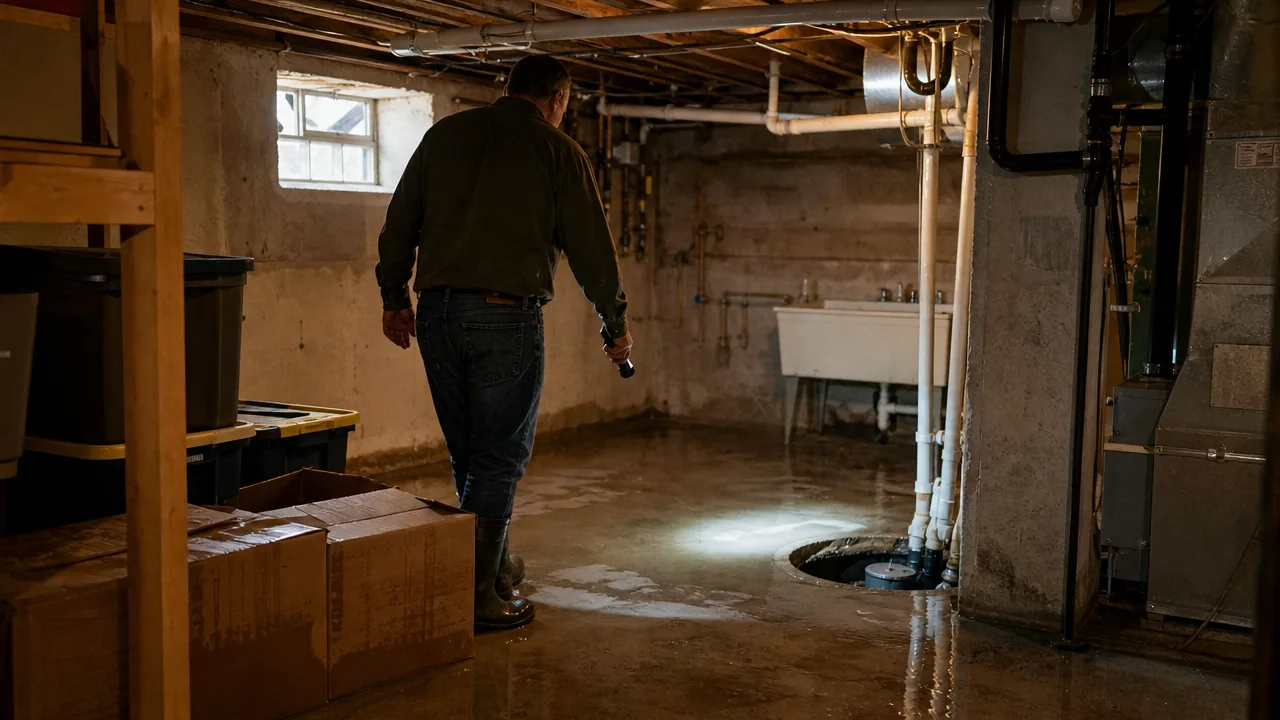
Finding water in your basement is stressful enough. Then comes the insurance question: is the damage covered? The answer depends largely on where the water came from and how it entered the home. Water released by a burst pipe is treated differently from water pushed up through a sewer line. A failed sump pump may involve another type of coverage, while rising water from outside is generally considered flooding.
Several incidents can leave similar damage behind, but they may fall under entirely different parts of your insurance program. Here is how the most common basement water scenarios break down for Chicago-area homeowners.
A Burst Pipe or Appliance Leak
A pipe bursts behind a basement wall. The supply line to your washing machine breaks. Your water heater suddenly releases water across the floor.
Homeowners insurance may cover the resulting damage when water escapes suddenly and accidentally from plumbing, heating, air-conditioning, or household appliances. Depending on the policy and circumstances, coverage could help repair damaged drywall, flooring, furniture, and other insured property. Standard homeowners policies commonly distinguish sudden water damage from flooding and other excluded sources of water.
However, insurance does not necessarily pay to repair or replace the item that caused the leak. A policy may cover the water-damaged wall without paying for the deteriorated pipe inside it. Damage caused by long-term seepage, corrosion, neglect, or a maintenance problem may also be excluded.
The timing of the damage matters. A washing machine hose that ruptures without warning is different from a pipe that has been dripping for months and has caused mold or rot.
A Sewer or Drain Backup
Water or sewage can enter a basement through a floor drain, toilet, sink, or other plumbing fixture when a sewer or drain backs up. Standard homeowners insurance frequently excludes this type of loss unless water-backup coverage has been added. Depending on the insurer, it may be called:
- Water-backup coverage
- Sewer-and-drain backup coverage
- Sump-pump overflow coverage
- Water-backup endorsement
This optional coverage may help pay for damage to the home and personal property caused by water or sewage backing up through a sewer or drain. We break down how it works in our Illinois sump pump and sewer backup guide.
Water-backup endorsements often have their own coverage limits and deductibles. A homeowner may have substantial dwelling coverage under the main policy but only a relatively small limit for a sewer-backup claim. That limit should reflect the cost of removing contaminated water, cleaning and sanitizing the basement, replacing damaged materials, and repairing or replacing belongings.
A Failed Sump Pump
A sump pump is designed to collect water around the home's foundation and move it away from the basement. When the pump loses power, becomes clogged, or mechanically fails, water may overflow from the sump pit.
The resulting damage is not necessarily covered by standard homeowners insurance. It commonly requires a water-backup endorsement that includes sump-pump overflow or failure. The endorsement may cover the damage caused by the escaping water, but that does not mean it will pay for a new sump pump. The pump itself may be considered a failed piece of equipment rather than part of the resulting water-damage claim.
Some insurance companies offer equipment-breakdown coverage that may respond when covered household equipment suffers an electrical or mechanical breakdown. Coverage varies significantly, and normal wear, corrosion, poor maintenance, and pumps that have simply reached the end of their useful life may remain excluded.
A homeowner with a finished basement should also review the water-backup limit carefully. Replacing flooring, drywall, cabinetry, electronics, furniture, and other belongings can quickly exceed a basic endorsement limit.
Rising Surface Water
Heavy rain can saturate the ground and overwhelm drainage systems, leading to water entering basements through windows, doors, window wells, or foundation openings. Flooding can also occur when a nearby creek, retention pond, or drainage area overflows, sending water into the same entry points.
When water accumulates outside and covers normally dry land before entering the home, the loss is generally treated as flooding. Standard homeowners insurance does not cover flood damage.
Flood insurance also has important limitations for basements. Coverage for improvements and personal property below grade can be restricted. Homeowners with finished basements should understand those restrictions before assuming their flooring, furniture, electronics, or finished walls are fully protected.
Flooding can occur outside a mapped high-risk flood zone. A home does not need to sit beside a river or lake for heavy rainfall and poor drainage to create a flood exposure.
A Broken Underground Sewer or Water Line
A damaged underground line can create two separate problems. First, water or sewage may enter the home and damage the basement. Depending on how the water entered, the resulting interior damage might involve homeowners insurance or water-backup coverage. Second, the homeowner may need to excavate the yard, locate the damaged pipe, and repair or replace the underground service line. Those expenses may fall under service-line coverage rather than water-backup coverage.
Service-line coverage is an optional endorsement offered by some insurers for underground piping and wiring that connects a home to public utilities or private systems. Depending on the policy, it may cover certain failures involving:
- Water lines
- Sewer lines
- Electrical service lines
- Internet or communications wiring
- Geothermal piping
Covered expenses may include excavation, line repair, replacement, and restoration of landscaping or paved surfaces. Availability, covered causes, limits, and deductibles vary by insurer. Our Chicago service line coverage guide explains how the endorsement works and what to check before a contractor starts digging.
A water-backup endorsement may help with damaged flooring and drywall after sewage enters the basement, while service-line coverage may address the cost of digging up and replacing the collapsed sewer line. One does not automatically replace the other.
One Incident May Involve Several Coverages
Basement water claims are complicated because the visible result does not reveal the cause. Consider a home where an underground sewer line collapses during a period of heavy rain. Sewage backs up through a basement drain, damages the finished basement, and requires excavation of the front yard. Different portions of that loss could potentially involve:
- Water-backup coverage for the interior damage
- Service-line coverage for excavation and repair of the pipe
- Flood insurance if qualifying surface flooding also enters the home
Coverage will depend on the policy language, endorsements, exclusions, limits, deductibles, and cause of the loss. Identifying the source of the water is one of the first and most important steps in evaluating a basement claim.
The Review to Do Before the Next Storm
Homeowners should review each potential gap separately:
- Sudden water damage originating inside the home
- Sewer or drain backup
- Sump-pump overflow or failure
- Surface flooding
- Underground service-line damage
- Mechanical or electrical equipment breakdown
The right combination depends on the home, basement use, drainage, plumbing, local flood exposure, and the amount of finished property or personal belongings below ground. Send us your current declarations page and we'll check which of these coverages you have, where the limits sit, and what it would take to close the gaps.
Reach out here, or call or text us at (312) 651-6759.
Frequently Asked Questions
Is basement water damage covered by homeowners insurance?
It depends on where the water came from. A sudden burst pipe or appliance leak is often covered. Sewer or drain backup and sump pump overflow usually require an optional water-backup endorsement. Rising surface water is generally treated as flooding, which standard homeowners policies exclude.
Does homeowners insurance pay to fix the pipe or sump pump that failed?
Usually no. A policy may cover the resulting water damage to walls, flooring, and belongings without paying to repair or replace the item that caused the leak. Damage from long-term seepage, corrosion, or neglected maintenance is commonly excluded.
What is the difference between water-backup coverage and flood insurance?
Water-backup coverage addresses water or sewage that backs up through a sewer, drain, or sump system. Flood insurance addresses water that accumulates outside, covers normally dry land, and then enters the home. They are separate coverages for different sources of water.
Can one basement water claim involve more than one coverage?
Yes. A collapsed sewer line during heavy rain could involve water-backup coverage for interior damage, service-line coverage for excavation and pipe repair, and flood insurance if qualifying surface water also enters the home. Identifying the source of the water is the first step in evaluating the claim.