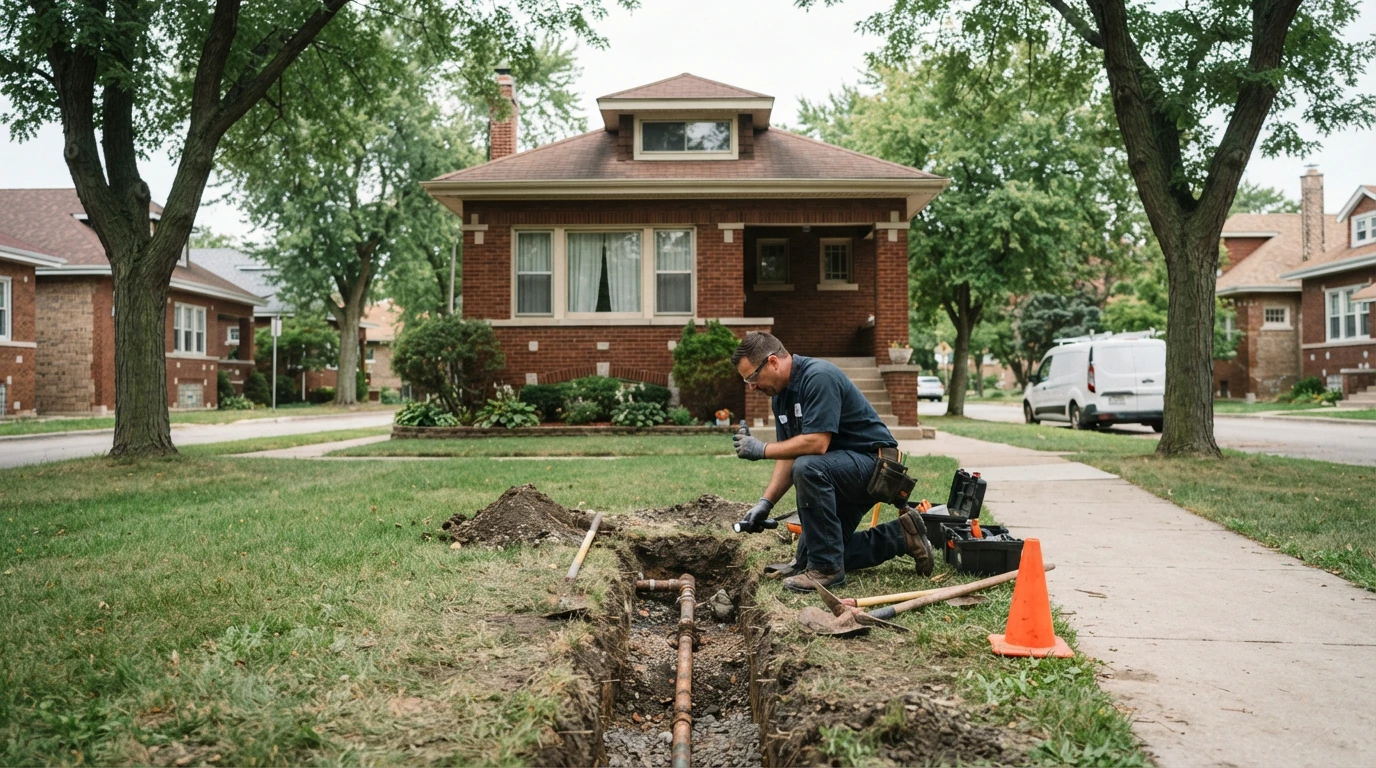
A pipe running beneath your front yard is easy to ignore because you never see it — right up until the water pressure drops, sewage stops draining, or a contractor says the repair requires excavation. That is when many Chicago homeowners discover an important dividing line: the utility may own the main in the street, but the line serving the house can still be the homeowner's responsibility.
Service line coverage is designed for that gap. It is usually an optional endorsement, not a standard part of a homeowners policy, and it is different from the sewer-backup coverage we discussed in our Illinois water-backup guide. Here is how the coverage works, where it can stop, and what Chicago property owners should check before there is a trench in the yard.
What Counts as a Service Line?
A service line is a pipe or wire that connects your home to a public utility or another exterior system. Depending on the carrier and endorsement, covered lines may include:
- Water service lines bringing municipal water into the home
- Sewer laterals or private drains carrying wastewater from the home to the public sewer
- Underground electrical service between the home and the utility connection
- Natural gas piping on the portion the homeowner is responsible for
- Communications lines such as underground internet or data cable, when listed by the policy
The exact ownership point is not identical for every utility or property. In Chicago, the City says the water service from the external shut-off valve into the home is the property and responsibility of the homeowner. The City also explains that when a private drain break is on private property, the homeowner must hire a city-licensed sewer contractor for the repair. Those rules are why it matters to identify whether the failure is on the public or private side before work begins.
Why a Standard Homeowners Policy May Not Pay for the Line
A standard homeowners policy can cover resulting damage from some sudden water losses inside the home, but that does not automatically mean it pays to excavate and replace the failed exterior pipe. Damage caused by wear and tear, corrosion, rust, deterioration, or tree-root intrusion is often excluded unless a specific service line endorsement changes the policy.
That distinction catches people off guard. The damaged basement flooring might be evaluated under one section of the policy, the water that came through a drain might require a separate water-backup endorsement, and the broken sewer lateral under the yard might require service line coverage. One event can touch three different coverage questions.
What Service Line Coverage Can Include
When a covered service line fails because of a cause listed in the endorsement, the coverage may help pay for:
- Locating the break and excavating the damaged area
- Repairing or replacing the affected section of pipe or wire
- Backfilling the trench after the repair
- Restoring damaged lawn, landscaping, driveway, or walkway, subject to policy limits
- Additional living expenses if a covered loss makes the home temporarily unlivable, when included by the form
Covered causes vary. Some forms include wear and tear, rust, mechanical breakdown, tree-root intrusion, freezing, or collapse; others are narrower. Limits, deductibles, age restrictions, and outdoor-property sublimits also vary by carrier. The endorsement name alone does not tell you how broad the protection is.
Service Line Coverage Is Not the Same as Water Backup
These two endorsements solve related but different problems:
- Service line coverage addresses physical damage to a covered underground pipe or wire that you own.
- Water backup coverage addresses water or sewage that backs up through a sewer, drain, or sump system and damages the home or personal property.
Imagine tree roots crack the private sewer lateral. Repairing the line and excavating the yard may fall under service line coverage. If sewage also backs up through the basement floor drain and ruins drywall, flooring, and stored belongings, that interior damage may depend on a water-backup endorsement. Having one does not guarantee you have the other.
Why Chicago Homes Deserve a Closer Look
Chicago's housing stock makes this worth reviewing. Brick bungalows, greystones, two-flats, and courtyard buildings often have mature trees, narrow lots, hardscape between the home and street, and utility lines that may have been installed or altered decades ago. Excavation can involve more than digging a patch of lawn; a contractor may need to work around sidewalks, retaining walls, porches, fences, or shared access.
Older material is not automatically a claim, and insurance is not a maintenance plan. But pipe age, prior repairs, large trees, recurring slow drains, discolored water, low pressure, and unexplained wet spots are good reasons to understand both the condition of the line and the policy before a failure.
A Separate Note About Lead Service Lines
Service line insurance should not be treated as a lead-pipe replacement program. A voluntary replacement made only because a line contains lead may not involve a covered cause of loss. Chicago maintains separate lead service line replacement programs, including homeowner-initiated and eligibility-based options. Homeowners considering replacement should review the current programs through Lead-Safe Chicago and confirm the property's line material before assuming insurance will participate.
What to Check on Your Policy
Pull the declarations page and endorsements, then ask these questions:
- Is service line coverage actually listed? If it is not named on the declarations or endorsement schedule, do not assume it is included.
- Which lines are covered? Confirm water, sewer, gas, electrical, and communications rather than relying on a generic label.
- Which causes of loss qualify? Ask specifically about wear and tear, rust, corrosion, tree roots, freezing, and collapse.
- What are the limit and deductible? Look for a separate service-line limit and any special deductible.
- How is older piping settled? Some forms account for age or apply different terms to older lines.
- What restoration is included? Confirm how the form treats lawn, landscaping, driveway, sidewalk, and other surfaces opened to reach the line.
- Do you also have water-backup coverage? The line repair and the damage inside the home are separate exposures.
For a Chicago landlord or owner of a two- to four-unit building, also confirm that the endorsement is available on the actual policy form covering the property. Do not assume a landlord or dwelling-fire policy matches the endorsement on a primary-residence homeowners policy. Our Chicago landlord insurance guide covers the other gaps rental owners should review.
What to Do When a Line Fails
- Protect people and property first. Shut off water when it is safe, keep people away from sewage or exposed electrical service, and prevent additional damage where possible.
- Determine which side failed. For a suspected public water or sewer issue in Chicago, contact 311. The responsible utility or City department may need to identify whether the break is public or private.
- Document the condition before permanent repair. Photograph the affected area, interior damage, excavation, damaged pipe, and any removed material. Keep inspection videos, contractor findings, and receipts.
- Call your agent or carrier promptly. Confirm claim instructions before authorizing permanent work when the situation allows. Emergency work to stop further damage should not wait, but it still needs documentation.
- Use properly licensed contractors. Chicago requires permits and licensed professionals for many water-service and private-drain repairs. The City publishes guidance for water-service permits and private drain repairs.
The Review to Do Before the Yard Is Open
Service line coverage is easy to overlook because it protects infrastructure you cannot see. But for a homeowner responsible for the private side of a buried line, the repair can involve the pipe, excavation, permits, and restoration all at once. The right time to learn how your policy treats those costs is before a contractor starts digging.
Send us your current homeowners declarations page and endorsement list. We'll check whether service line and water-backup coverage are included, compare the limits and deductibles, and explain how the form applies to your Chicago home. If the property is a condo, start with our separate guide to Chicago HO-6 coverage, since the association and unit owner may have different responsibilities.
Reach out here, or call or text us at (312) 651-6759.
Frequently Asked Questions
Who is responsible for water and sewer line repairs in Chicago?
The homeowner is typically responsible for the portion of the water, sewer, gas, and electrical service lines that runs across their property — from the house to the connection at the public main. When a buried line on your side fails, the repair bill is yours.
Does a standard homeowners policy cover service line repairs?
Usually no. Standard policies treat wear-and-tear, corrosion, and age-related failures of buried utility lines as maintenance, not a covered loss. Many carriers offer an optional service line endorsement that adds this protection for a modest additional premium.
Is service line coverage the same as sewer backup coverage?
No. Service line coverage pays to excavate and repair the broken line itself, while water backup coverage pays for damage inside your home when water backs up through drains or a sump pump. They solve different problems, and many homeowners benefit from both.
What does service line coverage typically include?
Depending on the carrier, it can include excavation and repair or replacement of the damaged line, outdoor restoration like landscaping or pavement disturbed by the work, and sometimes additional living expenses if the failure makes the home temporarily unlivable — subject to the endorsement’s limit and deductible.