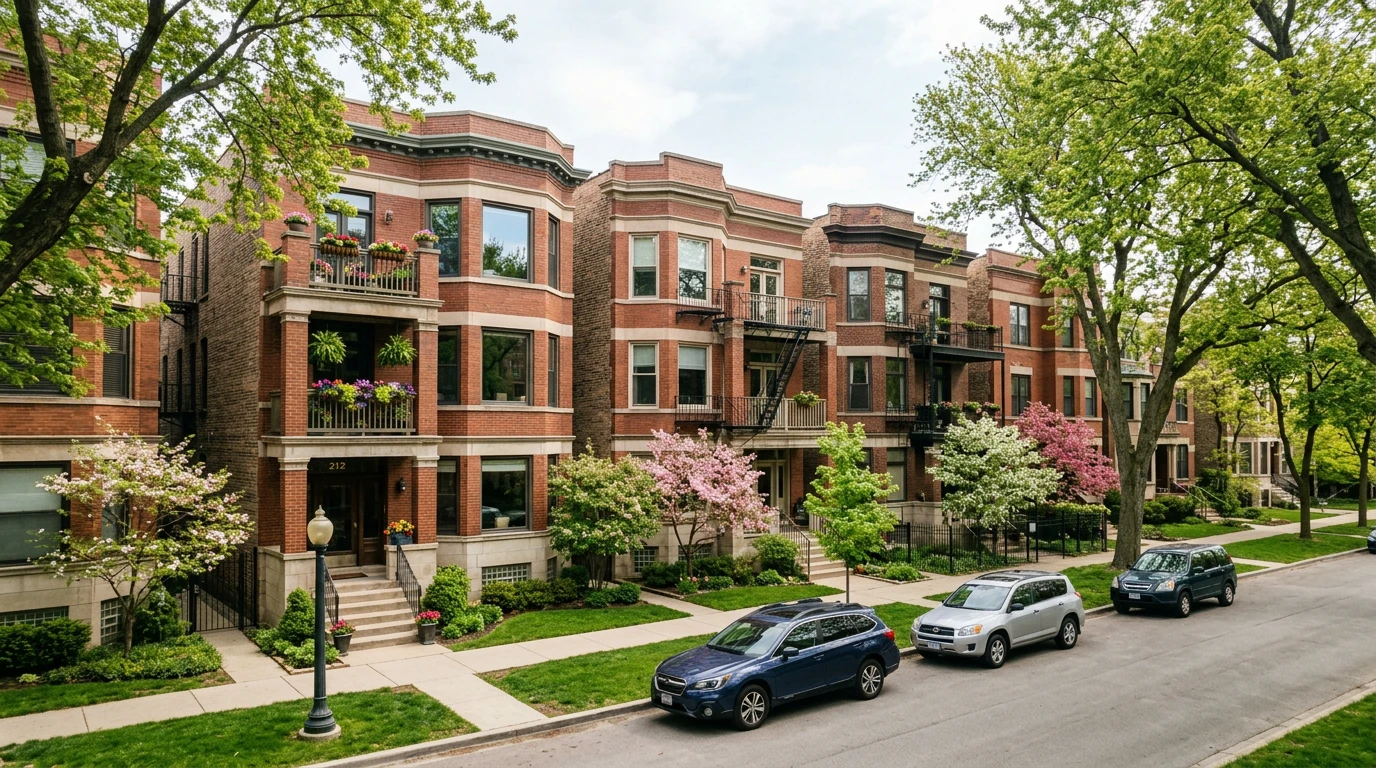
If someone says, “I live in a condo and we need building insurance for the association,” they are talking about the HOA master policy — the insurance program that protects property and liability the condominium association owns or is responsible for. It is different from the individual unit owner’s HO-6 policy.
The association master policy is the foundation of a condo community’s insurance program. It may cover the building structure, roof, exterior, shared mechanical systems, hallways, elevators, garages, and other common elements. It may also include general liability and be paired with directors and officers, crime or fidelity, equipment breakdown, umbrella, or other coverage.
The exact answer depends on the association declaration, bylaws, maintenance responsibilities, property layout, policy form, and endorsements. Here is a practical Chicago guide for unit owners, volunteer boards, and property managers who need to understand what condo association building insurance should do.
What Is Condo Association Building Insurance?
Condo association building insurance is the property coverage arranged for the association’s insured buildings and common property. It is commonly written as part of a commercial condominium or community association insurance program rather than as an individual homeowners policy.
Start with the governing documents. They identify what the association owns, what it maintains, what is a common element or limited common element, and where a unit owner’s responsibility begins. The master policy then describes what the insurer will cover, for which causes of loss, at what limit, and subject to which deductible and exclusions.
A building insurance quote is not correct simply because it lists the right street address. The policy needs to reflect the association’s actual property, construction, shared systems, amenities, occupancy, maintenance responsibilities, and loss history.
What the Condo Association Master Policy May Cover
The association should review the property and liability program as a whole. These are the main pieces to discuss with an insurance agent:
| Coverage | What it is designed to address | Question for the board |
|---|---|---|
| Building property | Covered damage to association-insured structures and building components. | Does the limit reflect current Chicago construction and repair costs? |
| Common elements | Covered damage to property such as roofs, corridors, lobbies, exterior features, garages, and shared facilities when the association is responsible for them. | Are all buildings, addresses, amenities, and limited common elements described correctly? |
| Association-owned equipment | Covered damage to property such as boilers, pumps, tools, or furnishings owned by the association, subject to the policy. | Do shared mechanical systems or equipment require a separate breakdown review? |
| General liability | Certain third-party bodily injury or property-damage claims tied to association property or operations. | Are sidewalks, stairs, elevators, parking, pools, gyms, and community rooms included in the exposure review? |
| Additional association coverages | D&O, crime or fidelity, umbrella or excess liability, cyber, equipment breakdown, and other coverage appropriate to the community. | Do the limits and insureds match the board’s responsibilities, reserves, vendors, and contracts? |
This table is a starting point, not a promise that a particular loss is covered. The cause of loss, policy form, insured status, limit, deductible, exclusion, and association documents all matter.
Building Coverage Should Be Based on Replacement Cost
The building’s market value is not the same as the cost to repair or rebuild insured property. A condo association should review its limit using current replacement-cost information, especially when the community has older masonry, custom finishes, elevators, shared mechanical systems, finished lower levels, or several connected buildings.
A board should ask whether the valuation includes the cost of labor and materials, demolition and debris removal, permits, architect or engineering fees, and required code upgrades. Ordinance or law coverage may be important after a covered loss if repairs must bring part of an older building up to current requirements. The limit, sublimit, and conditions vary by policy.
An old appraisal, the original construction budget, or the association’s property-tax value may not be a reliable current limit. A replacement- cost review is worth putting on the renewal calendar and revisiting after major renovations, additions, new amenities, or significant changes in construction costs.
Deductibles Can Become an Owner Conversation
Condo association policies can have different deductibles for different causes of loss. A board may be looking at an all-other-perils deductible alongside separate water, wind, hail, equipment, or percentage-based deductibles. The largest number is not always the only one that matters.
If the association has a covered loss and the cost is allocated among unit owners, an owner’s personal policy may need loss assessment coverage that responds to the assessment, subject to its terms, limits, and exclusions. The association should not assume every owner has enough coverage, and an owner should not assume the master policy absorbs every deductible without an assessment.
Put the deductible schedule in plain language for the board and owners. Explain which policy responds first, who is responsible for the repair, how the association documents address an allocation, and what each unit owner should review in an HO-6 policy. Our guide to condo insurance for Chicago unit owners covers the personal-policy side of this handoff.
Chicago Water Risks Deserve a Separate Review
Water losses are one of the clearest reasons not to treat a condo building insurance quote as a single property limit. In a Chicago building, a loss can involve a roof, riser, shared pipe, unit plumbing, basement, drain, sump, or buried line — and each cause can raise a different coverage question.
- Water backup and sump discharge: Water or sewage backing up through a drain or sump may require a specific endorsement or limit. Confirm whether it applies to common property, unit interiors, contents, cleanup, and the applicable deductible.
- Supply or sprinkler leaks: A burst pipe, sprinkler discharge, or failed valve is a different cause of loss from water backing up through a drain. Review the property form, damage to shared systems, and responsibility for resulting unit damage.
- Basements and lower levels: Mechanical rooms, storage, parking, elevators, and finished common areas may make a lower-level loss more expensive than a standard building estimate suggests.
- Buried service lines: Ask who owns the water, sewer, gas, electrical, or communications line and whether eligible excavation and repair costs are addressed by an endorsement or another policy.
- Flood and surface water: Standard property coverage and flood coverage are different questions. A community with lower levels, parking, or equipment near grade should ask for a separate flood and water-exposure review.
For a deeper explanation of the water questions that often overlap, review our guides to sump pump and sewer backup coverage and service line coverage in Chicago.
Building Insurance Is Only One Part of the Association Program
The property limit protects only one part of the association’s risk. Boards should also ask whether the insurance program addresses the way the association operates and the people who run it.
- General liability: Review shared walks, stoops, roofs, garages, playgrounds, pools, gyms, elevators, and community rooms, along with contracts and vendor requirements.
- Directors and officers liability: D&O is designed for certain claims alleging a wrongful act in the conduct of association business. It is not the same as building property or general liability insurance, and the form, insureds, retention, claims-made dates, and exclusions matter.
- Crime or fidelity: The limit should be reviewed in light of reserve funds, assessments, operating accounts, electronic transfers, the property manager’s role, and who can access association money.
- Umbrella or excess liability: Additional liability limits may be appropriate for a larger building, shared amenities, high-traffic property, or community with significant assets. Review the underlying limits and exclusions together.
- Equipment breakdown and cyber: Boilers, elevators, pumps, access systems, payment platforms, and owner information can create exposures beyond ordinary building damage.
Our broader Chicago HOA insurance guide walks through master policy structure, D&O, crime, deductibles, umbrella coverage, and the questions boards should put on the renewal agenda.
How the Master Policy Fits with Each Owner’s HO-6
The association master policy does not insure everything a unit owner owns or everything that can happen inside a unit. Depending on the building’s policy form and governing documents, the owner may need coverage for:
- Personal property: furniture, clothing, electronics, bikes, tools, artwork, and other belongings.
- Unit improvements and betterments: flooring, cabinetry, fixtures, built-ins, and finishes assigned to the owner or installed after original construction.
- Personal liability: certain claims arising from an accident, a leak, a pet, or another event tied to the owner’s unit or personal activities.
- Additional living expenses: qualifying extra costs if a covered loss makes the unit unlivable.
- Loss assessment: eligible assessments passed to the owner after a covered association loss, subject to the HO-6 policy.
The association should give owners clear insurance information, but each owner is responsible for reviewing their own policy. If a board is unsure where a unit boundary falls, compare the master policy to the declaration and ask the association’s attorney and insurance agent to explain the difference before a claim occurs.
What to Gather Before Requesting a Condo Association Quote
A complete submission helps an agent quote the association accurately and compare markets on more than price. Gather:
- Governing documents: the declaration, bylaws, amendments, maintenance responsibilities, and insurance requirements.
- Current insurance: the declarations page, forms, endorsements, deductible schedule, certificates, and any umbrella, D&O, crime, cyber, or equipment policies.
- Property details: addresses, number of buildings and units, square footage, stories, construction, roof age, wiring, plumbing, HVAC, elevators, garages, basements, pools, and other amenities.
- Financial and management details: reserve and operating funds, property manager information, employees, vendors, contracts, and security or access systems.
- Loss history and projects: recent claims, open repairs, roof or masonry work, assessments, renovations, and planned capital improvements.
If the association has a certificate of insurance, remember that a certificate summarizes insurance information; it does not replace the policy forms and endorsements. The board should review the actual coverage when making a renewal or contract decision.
Common Condo Association Insurance Mistakes
- Insuring the building for market value. Property needs a replacement-cost review, not a real-estate valuation.
- Assuming “all-in” or “bare walls” says enough. The policy wording and association documents define the real boundary.
- Reviewing only the property limit. Liability, D&O, crime, water, equipment, and umbrella exposures can be just as important to the board.
- Ignoring the deductible allocation. A deductible can become a special-assessment question for owners, depending on the documents and applicable rules.
- Quoting without loss history or building details.Incomplete information makes it harder to compare coverage fairly and may create problems after a loss.
Get a Condo Association Building Insurance Review
Six Corners Insurance helps Chicago condo associations and townhome boards review building limits, common elements, liability, deductibles, water-related coverage, D&O, crime, and umbrella options. We can compare eligible markets and explain how the master policy fits with what unit owners need to carry individually.
If your board needs building insurance, start with our Chicago HOA insurance overview or request a free association insurance review.
Sources
- Illinois Condominium and Community Association Ombudsperson — Insurance Requirements for Associations
- Community Associations Institute — Risk Management & Insurance for Community Associations
- Six Corners Insurance — Chicago HOA Insurance Guide
- Six Corners Insurance — Condo Insurance for Chicago Unit Owners
Frequently Asked Questions
What is condo association building insurance?
Condo association building insurance is the property portion of an HOA master policy. It is designed to address covered damage to association-insured buildings, common elements, and other property the association owns or is responsible for. The declaration, bylaws, and policy wording determine the actual boundary.
Does a condo association master policy replace an HO-6 policy?
No. The master policy and an individual HO-6 policy serve different purposes. The association policy may insure the building and common property, while the unit owner usually needs an HO-6 for personal property, personal liability, additional living expenses, improvements, and loss assessment coverage, subject to the policy terms and governing documents.
How much building insurance should a Chicago condo association carry?
The building limit should be based on a current replacement-cost analysis for the association-insured property, not the building market value, loan balance, or original construction cost. The review should account for labor, materials, debris removal, code-related work, and other policy conditions.
Who pays the condo association insurance deductible?
The association policy responds subject to its deductible, but the association documents and applicable law may determine how the cost is allocated afterward. Boards should review property, water, wind, hail, equipment, and percentage-based deductibles and explain the potential assessment exposure to unit owners.
What should a condo board gather before requesting an insurance quote?
Gather the declaration and bylaws, current master policy and loss runs, building addresses and square footage, construction and roof details, shared systems and amenities, property-manager information, financial or reserve details, recent projects, and the association insurance requirements. Complete information helps an agent compare the right program.