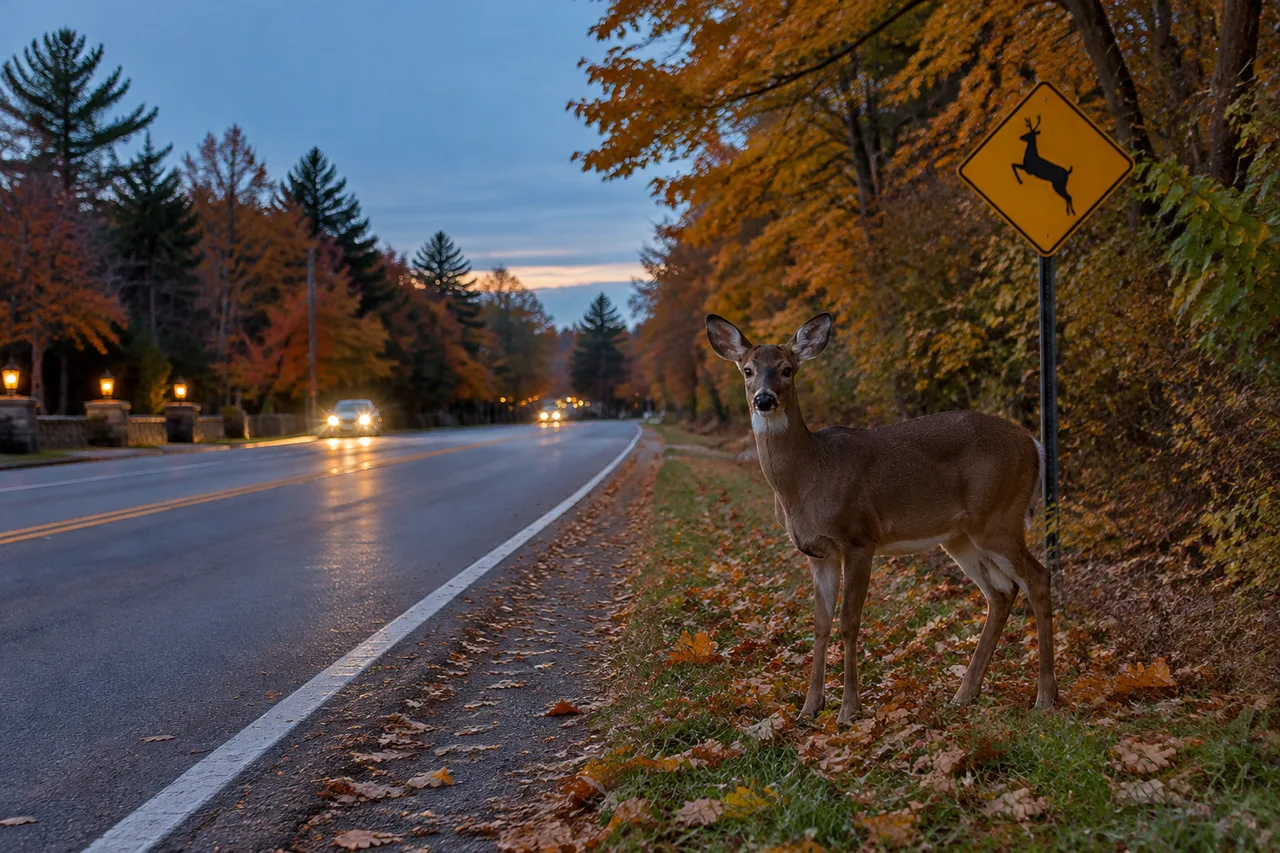
Quick answer: Hitting a deer is covered by the comprehensive part of your car insurance, not collision. Comprehensive pays to fix your car minus your deductible, and most insurers do not count a deer strike as an at-fault accident. If you only carry the liability coverage Illinois requires, the damage to your own car is not covered. And if you swerve to miss the deer and hit something else, it usually becomes a collision claim instead.
Late October through December is deer season on Illinois roads, and it is not just a downstate problem. Cook County had more deer crashes last year than any other county in the state. Here is what your policy pays for, what to do in the minutes after a deer strike, and how to make sure you are covered before November, the most dangerous month of the year.
How Often Illinois Drivers Hit Deer
According to the Illinois Department of Transportation and the Illinois Department of Natural Resources, there were 14,529 crashes involving deer in Illinois in 2025. Of those, 13,846 damaged vehicles or property, 677 caused injuries, and six crashes killed seven people.
- 41% of deer crashes happened in October, November, and December, during the fall mating season. November was the highest-risk month.
- Eight in 10 happened at twilight or after dark.
- Cook County led the state with 559 deer crashes, followed by McHenry (391) and Kane (372). Will and Lake counties also ranked in the top 10.
Nationally, State Farm puts the odds of a U.S. driver filing an animal collision claim at about 1 in 145 this year, with November, October, and December the top three months.
Where Chicago-Area Drivers Meet Deer
Most Chicago deer crashes don't happen downtown. They happen along the green edges of the city and the suburbs, where deer live in the forest preserves and cross busy roads at dawn and dusk:
- Roads that run along Cook County forest preserves, like the Des Plaines River corridor and the North Branch of the Chicago River
- The northwest and west suburbs heading toward McHenry and Kane counties
- Tollways and expressways bordered by woods and open land
- Winding two-lane roads in Lake and Will counties, especially on weekend trips
If you commute out of the city early in the morning or drive home after dark, and in November that covers almost everyone, deer are part of your daily drive.
Comprehensive vs. Collision: Which One Pays
Here is how car insurance usually handles the most common deer crash situations:
- You hit a deer that runs into the road: comprehensive
- A deer runs into the side of your car: comprehensive
- You hit a deer someone else already struck and it is lying in the road: usually comprehensive, though some carriers treat hitting a still object as collision
- You swerve to miss a deer and hit a tree, pole, or guardrail: collision
- You swerve to miss a deer and hit another car: collision for your car, and your liability coverage for the other driver
- You or a passenger is hurt: medical payments coverage or your health insurance
For a full breakdown of the two coverages, see our guide to comprehensive vs. collision coverage in Chicago.
Why You Should Not Swerve
IDOT and IDNR tell drivers not to swerve. If a crash can't be avoided, brake firmly, stay in your lane, and hit the deer rather than veering into oncoming traffic or off the road. Their reason is safety: swerving causes many of the most serious deer-related crashes. It also matters for your insurance. Hitting the deer is a comprehensive claim that usually isn't held against you. Hitting a tree or another car while swerving is a collision claim, often with a higher deductible, and it may count as an at-fault accident.
What a Deer Crash Costs
Modern cars pack sensors, cameras, and LED headlights into the front bumper and grille, exactly where a deer hits. A deer strike that once meant a dented hood can now mean replacing radar sensors, headlight assemblies, a radiator, and an airbag, followed by recalibrating driver-assist systems. Repair bills of several thousand dollars are common, and a large deer can total an older car. That is why comprehensive coverage is worth keeping on any car you could not afford to repair or replace out of pocket.
What to Do After You Hit a Deer
- Pull over safely onto the shoulder and turn on your hazard lights.
- Call 911 if anyone is hurt, the deer is blocking traffic, or your car isn't safe to drive. Otherwise, call the local or state police non-emergency line.
- Stay away from the deer. State officials warn not to approach an injured deer or try to drag it off the road. An injured deer can kick and cause serious injuries.
- Take photos of the damage to your car, the scene, the road, and the deer if you can do it safely.
- Get a police report number. Illinois requires a crash report when damage passes $1,500, which most deer strikes do.
- Check your car before driving. Look for leaking fluid, broken headlights, a loose hood or bumper, and warning lights. Call for a tow if anything looks wrong.
- Call your insurance agent or carrier to start the claim, and ask about rental reimbursement if your car will be in the shop.
Illinois Rules to Know
- Crash reports: each driver in an Illinois crash must file a report if the crash causes a death, an injury, or more than $1,500 in property damage. The threshold drops to $500 if any driver involved is uninsured.
- Keeping the deer: an Illinois resident who was driving gets first claim to a deer killed in the crash, and must report it to IDNR within 24 hours through the Claim a Road Kill form. No part of the deer can be sold. It is illegal for anyone except law enforcement to kill a deer injured in a collision.
- Minimum coverage: Illinois only requires liability and uninsured motorist coverage. Neither pays for damage to your own car after a deer strike. Our guide to uninsured motorist coverage in Illinois explains what the required coverages do.
Tips to Avoid Hitting a Deer
- Slow down at dawn and dusk from October through December, especially near woods and deer crossing signs.
- Scan the sides of the road for eye shine from your headlights.
- Use your high beams on dark roads when there is no oncoming traffic.
- Expect more than one. Deer move in groups, so if one crosses, others usually follow.
- Brake firmly and stay in your lane instead of swerving.
- Buckle up. A seat belt is your best protection in any crash.
For more cold-weather driving advice, see our winter prep tips and, if you have a new driver at home, our guide to teen drivers and auto insurance.
Your Deer Season Coverage Checklist
- Check your declarations page to confirm comprehensive coverage on every car.
- Make sure your comprehensive deductible is an amount you could pay tomorrow.
- Add rental reimbursement if you depend on your car to get to work.
- Consider roadside assistance or towing coverage for night and highway driving.
- Add gap insurance if you owe more on your loan or lease than the car is worth.
- Review your medical payments coverage limits.
- Save your agent's number and claim line in your phone.
- Keep a flashlight and a charged phone in the car for dark-road stops.
The Bottom Line
A deer strike is one of the most common car insurance claims in Illinois each fall, and comprehensive coverage is what pays for it. If you have dropped comprehensive to save money, or you are not sure what your deductible is, now is the time to check, before November. Our auto insurance 101 guide covers the rest of your policy, and our guide to reshopping home and auto insurance explains when it pays to compare carriers.
As an independent insurance agency in Chicago, we compare car insurance from multiple carriers and can show you what comprehensive coverage and a lower deductible would really cost. Contact Six Corners Insurance for a free auto policy review before deer season peaks.
Sources
- Illinois Department of Natural Resources — Claim a Road Kill
- Illinois State Police — Crash Reports
- Illinois Department of Transportation — 2024 Illinois Crash Facts & Statistics
- Illinois Department of Insurance — Auto Insurance Shopping Guide
- Shaw Local — Cook, McHenry, Kane counties lead Illinois for deer crashes (IDOT and IDNR 2025 data)
- State Farm — Where Are Animal (Deer) Collisions Most Likely?
Frequently Asked Questions
Does car insurance cover hitting a deer in Illinois?
Yes, if you carry comprehensive coverage. Hitting a deer is a comprehensive claim, so your insurer pays to repair your car minus your comprehensive deductible. Liability-only policies, the minimum Illinois requires, do not pay for damage to your own car after a deer crash.
Is hitting a deer an at-fault accident?
Usually not. Because a deer strike is a comprehensive claim, most insurers do not treat it as an at-fault accident, and a single deer claim is less likely to raise your rate than a collision you caused. Rules vary by carrier, so ask your agent how yours handles it.
What if I swerve to miss a deer and hit something else?
Then it is usually a collision claim, not comprehensive. If you swerve and hit a tree, a guardrail, a pole, or another car, collision coverage pays for your car after your collision deductible, and the claim may be treated as at fault. That is one reason state officials advise against swerving.
Do I have to report a deer crash to the police in Illinois?
Illinois requires a crash report when a crash causes an injury, a death, or more than $1,500 in property damage ($500 if any driver involved is uninsured). Most deer strikes easily pass $1,500 in damage. Calling 911 or the local police from the scene also gives you a report number for your claim.
Can I keep a deer I hit in Illinois?
Yes. An Illinois resident who was driving gets first claim to a deer killed in a collision. You must report possession to the Illinois Department of Natural Resources within 24 hours using its Claim a Road Kill form. No part of the deer can be sold or traded.