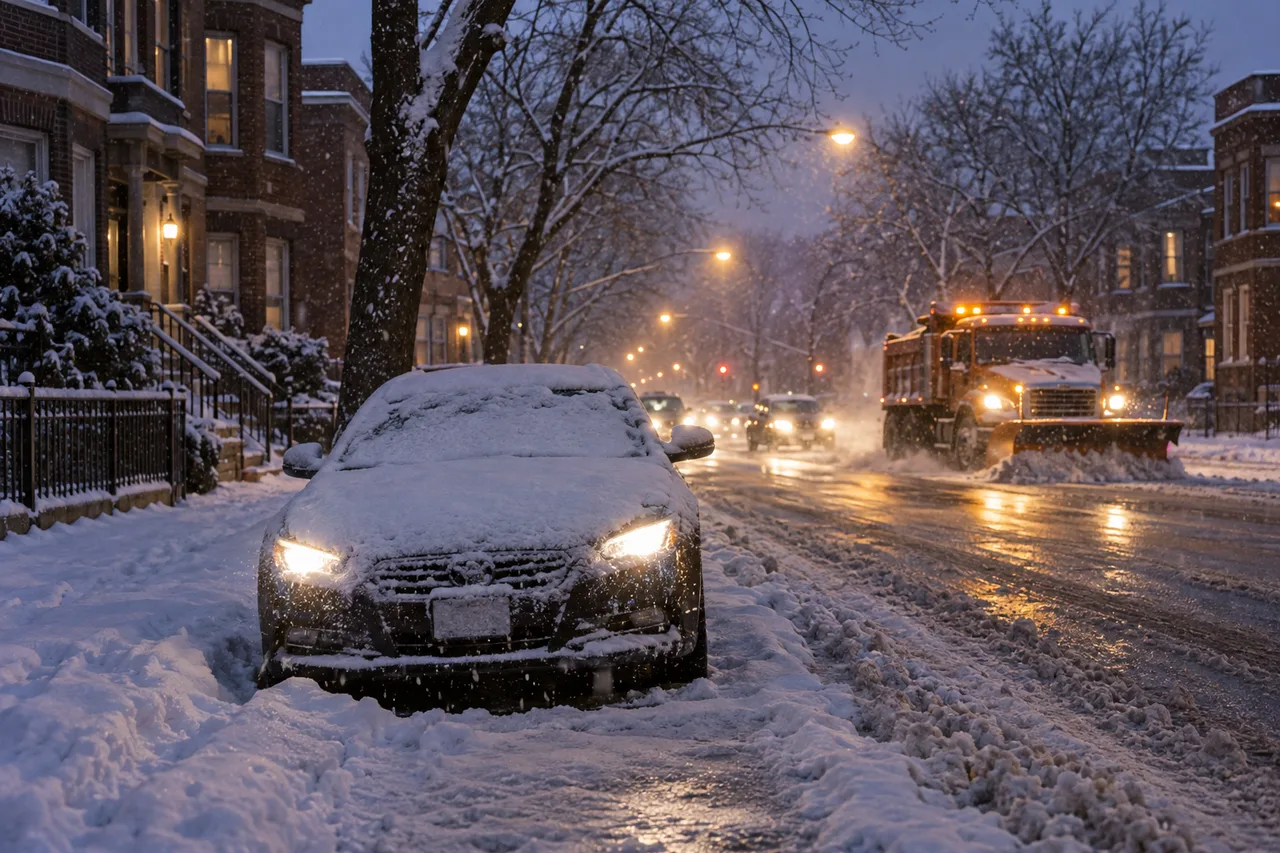
Quick answer: In a Chicago winter, collision coverage pays for your car when you slide on ice into another car, a curb, or a pole, and comprehensive pays for theft, falling ice, and snapped tree limbs. Your liability coverage pays for damage you do to others, and icy roads rarely move the blame off the driver who slid. Insurance does not pay for a tow during the city's winter parking bans, which start again on December 1. Before the first big storm, check that you carry collision and comprehensive, that your deductibles are affordable, and that roadside assistance is on your policy.
Every year the first real snowfall brings the same calls to our Bucktown office: a slow slide through a stop sign on a side street, a car that disappeared while it was warming up in front of a two-flat, a bumper cracked on a frozen snowbank, and a car that went to the pound because it sat on Damen at 3 a.m. Here is how car insurance handles each of them, what Chicago and Illinois rules you need to know, and a checklist to finish before winter sets in. For the rest of this month's list, see our November 2026 Chicagoland insurance tips.
Winter Car Trouble and What Pays
| What happened | Coverage that usually pays | Watch out for |
|---|---|---|
| You slide on ice into another car | Liability for their car; collision for yours | You are usually found at fault |
| You slide into a curb, pole, or guardrail | Collision | Nothing for your car on a liability-only policy |
| Someone slides into you | Their liability, or your collision and uninsured motorist coverage | Hit-and-runs and uninsured drivers |
| Car stolen while warming up | Comprehensive | Belongings inside fall under your home or renters policy |
| Ice, snow, or a branch falls on your car | Comprehensive | Your deductible applies |
| Pothole bends a rim or the suspension | Collision | Tire damage alone often costs less than the deductible |
| Dead battery or stuck in a snowbank | Roadside assistance | Only if you added it |
| Towed for the parking ban | Nothing | Tow, ticket, and storage fees are yours |
1. Sliding on Ice: Collision Coverage and Who Is at Fault
Ice turns small mistakes into claims. When your car slides into another car, a parked car, a light pole, or a guardrail, the damage to your own car is a collision claim, paid after your deductible. The damage to the other car, and any injuries, is paid by your liability coverage. If you dropped collision on an older car to save money, a winter slide comes out of your pocket. Our comprehensive vs. collision guide explains when it still makes sense to carry both.
Who is at fault? Usually the driver who slid. Illinois drivers are expected to slow down and leave more room when roads are slick, so "it was icy" is rarely a defense. Illinois uses modified comparative negligence: fault can be split between drivers, and your recovery is reduced by your share, but a driver more than 50 percent at fault recovers nothing from the other side. An at-fault winter crash can also raise your premium at renewal.
Liability limits for a winter pileup
Illinois requires only 25/50/20 liability: $25,000 per person, $50,000 per accident for injuries, and $20,000 for property damage. A chain-reaction crash on the Kennedy or the Edens can involve several cars, and $20,000 does not go far with today's repair costs. Most drivers we work with carry 100/300/100 or more, and a personal umbrella policy adds $1 million or more on top. See how much umbrella insurance you need in Illinois.
When someone slides into you
The other driver's liability coverage should pay for your car and injuries. When that driver has no insurance, too little, or drives off, your uninsured and underinsured motorist coverage and your collision coverage step in. If a car slides into yours while it is parked on the street overnight, take photos of the car and the scene before you dig it out, and file a police report.
2. Chicago's Winter Parking Bans Start December 1
Chicago has two winter parking rules, and drivers often mix them up:
- Winter Overnight Parking Ban: from December 1 through April 1, parking is banned from 3 a.m. to 7 a.m. on about 107 miles of main streets, whether or not it snows. Permanent signs mark the routes.
- 2-inch snow parking ban: about 500 more miles of main streets can be closed to parking after at least two inches of snow, at any time of day and on any date. Signs mark these routes too.
Cars left on a banned route are towed to a city pound. Last season the bill was a towing fee of at least $150, a $60 ticket, and $25 a day in storage; check the city's site for this season's figures. None of it is covered by insurance, because a tow for a parking violation is not an accident. If your car is damaged during a city tow, report it to the city and talk to us before paying for repairs.
Street parking also brings plows and frozen windrows of snow. A plow or another car that hits your parked car is a collision claim, and your insurer can try to recover the money, including your deductible, from whoever is responsible.
3. Warming Up Your Car: Theft and Illinois Law
Thieves look for exhaust on cold mornings. A car left running and unlocked in front of a house, a gas station, or a corner store is one of the easiest cars in the city to steal.
- The law: the Illinois Vehicle Code (625 ILCS 5/11-1401) says you can't leave a car unattended without stopping the engine, locking the ignition, and removing the key. A locked car started with a remote starter is specifically exempt.
- The insurance: theft of the car is a comprehensive claim, minus your deductible. Without comprehensive, there is no coverage for theft.
- What was inside: a laptop, gifts, or a gym bag stolen with the car is covered by your homeowners, condo, or renters insurance, subject to that policy's deductible. Tools you use for work may need business coverage instead.
The safest habits are a remote starter or simply staying in the car, keeping spare keys and fobs out of the car, and never leaving a running car unlocked, even for a minute.
4. Falling Ice, Tree Limbs, and Potholes
Heavy, wet snow snaps the parkway trees that line so many North and Northwest Side streets, and ice slides off gangway roofs and porches onto cars below. Both are comprehensive claims. If a limb from a neighbor's tree lands on your car, your own comprehensive coverage is usually what pays, unless the tree was clearly dead or neglected.
Potholes bloom with every freeze and thaw. Pothole damage is a collision claim. A single blown tire is often cheaper to replace than your deductible, but a bent rim, a broken control arm, or an alignment problem can easily pass it. The city takes pothole damage claims separately; keep your repair receipts and photos.
5. Roadside Assistance and Rental Reimbursement
A battery that dies at 6 a.m. in January or a car stuck in an unplowed alley needs a tow or a jump, not a claim. Roadside assistance covers jump starts, lockouts, flat tires, winching out of snow, and towing to a shop, usually for a few dollars a month. Rental reimbursement pays for a rental car while yours is in the shop after a covered claim, which matters when body shops fill up after a storm and repairs take longer. If you also travel for the holidays, read rental car insurance for Chicago drivers.
6. Safe Winter Driving Habits That Prevent Claims
- Keep tires properly inflated, since cold air drops pressure, and replace worn tires before the snow; consider winter tires.
- Clear all the snow and ice off the windows, lights, roof, and hood before you drive.
- Slow down, double your following distance, and brake gently; bridges and ramps freeze first.
- Give plows and salt trucks plenty of room, and don't pass them on the right.
- Move over or slow down for stopped emergency vehicles and tow trucks with flashing lights, as Scott's Law requires.
- Keep at least half a tank of gas and a winter kit: scraper, small shovel, blanket, phone charger, and kitty litter or sand for traction.
- Check road conditions before longer drives and stay home in the worst of a storm if you can.
New drivers should practice in an empty lot first; our guide for teen drivers in the Midwest covers the insurance side. Rideshare and delivery drivers picking up winter shifts should read our rideshare insurance guide, because a personal policy may not cover you while the app is on.
Your Winter Car Insurance Checklist
- Confirm you carry collision and comprehensive, or decide knowingly to go without them on an older car.
- Make sure your deductibles are amounts you could pay tomorrow.
- Review your liability limits; consider 100/300/100 or higher and a personal umbrella.
- Check that uninsured and underinsured motorist coverage matches your liability limits.
- Add roadside assistance and rental reimbursement if you don't have them.
- Learn whether your street is on an overnight or 2-inch snow parking ban route, and plan where to park before December 1.
- Never leave a running car unlocked; use a remote starter or stay with the car.
- Keep valuables out of the car, and check your homeowners, condo, or renters coverage for what you carry in it.
- Prep the car: tires, battery, wipers, washer fluid, and a winter kit.
- Save your agent's number and your insurer's claims line in your phone.
If You Have a Winter Accident
- Turn on your hazard lights, check for injuries, and call 911 if anyone is hurt or the cars block traffic.
- If the cars can move safely, move them out of traffic.
- Photograph the cars, the road surface, the weather, and any signs before the snow covers them.
- Exchange names, insurance, and plate numbers, and get witnesses' contact information.
- Use a tow company you choose or your roadside assistance, rather than a truck that shows up uninvited.
- Don't admit fault; report the claim to your agent or insurer promptly.
The Bottom Line
Most winter car trouble in Chicago is covered if you carry the right pieces: collision for slides and potholes, comprehensive for theft and falling ice, enough liability for a multi-car crash, and roadside assistance for the mornings the car won't start. The gaps we see every winter are liability-only policies, deductibles that are too high to use, and tows nobody can claim. Ten minutes before December 1 is the cheapest way to fix them.
As an independent insurance agency in Chicago, we compare auto insurance from multiple carriers, and bundling home and auto often pays for the coverage you were missing. Contact Six Corners Insurance for a free winter coverage review.
Sources
- City of Chicago — Winter Snow Parking Restrictions
- Illinois General Assembly — Unattended Motor Vehicles (625 ILCS 5/11-1401)
- Illinois Department of Insurance — Comparative Negligence
- Illinois State Police — Move Over Law (Scott’s Law)
- National Association of Insurance Commissioners — Auto Insurance
- NHTSA — Winter Driving Tips
Frequently Asked Questions
Does car insurance cover sliding on ice in Chicago?
Damage to your own car from sliding on ice into another car, a curb, a pole, or a guardrail is covered by collision coverage, minus your deductible. Damage you cause to other people and their property is covered by your liability coverage. Drivers with liability-only policies have no coverage for their own car in a single-car slide.
Who is at fault if I slide on ice and hit another car?
Usually the driver who slid. Illinois expects drivers to adjust their speed and following distance for snow and ice, so bad weather is rarely accepted as an excuse. Illinois uses modified comparative negligence: fault can be shared, but a driver found more than 50 percent at fault cannot recover damages from the other driver.
Is my car covered if it is stolen while warming up?
Theft of the car is covered under comprehensive coverage, minus your deductible, if you carry it. Belongings stolen from inside the car are covered by your homeowners, condo, or renters policy, not your auto policy. Illinois law also requires you to turn off the engine and take the key when you leave a car unattended; a locked car started with a remote starter is the exception.
Does insurance pay if my car is towed during the Chicago winter parking ban?
No. Towing and impound fees from a parking violation are not an insured loss. Roadside assistance or towing coverage pays for a tow after a breakdown or getting stuck, not a tow ordered by the city.
Is damage from a snowplow or falling ice covered?
Ice or snow falling on your car, or a tree limb that snaps under the weight, is covered by comprehensive. If a plow or another vehicle hits your parked car, your collision coverage can pay for repairs, minus your deductible, and your insurer can then seek repayment from whoever is responsible.