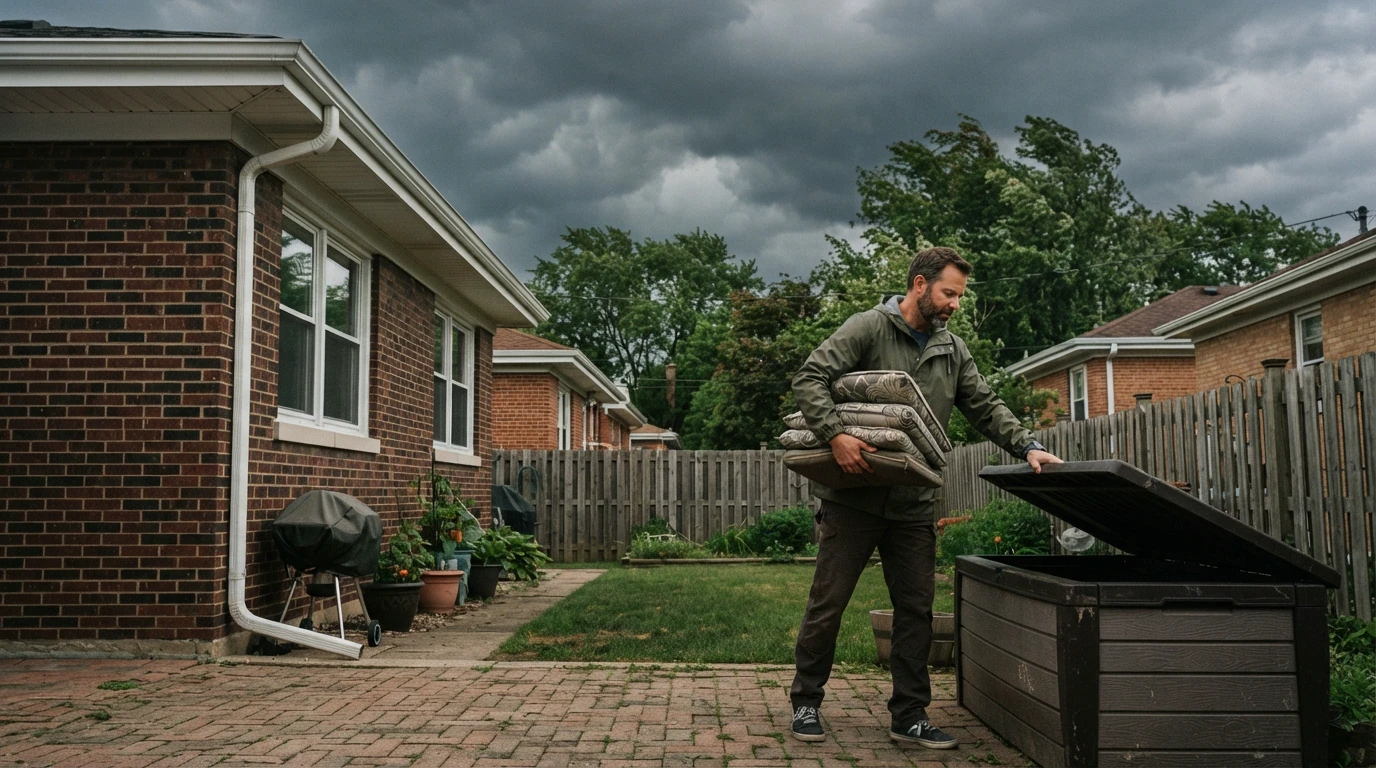
Most costly storm damage does not begin with a tornado siren or a dramatic forecast. It begins with an ordinary summer line of thunderstorms: a loose patio chair hits the siding, a clogged downspout sends water toward the foundation, the power drops while the sump pump is running, or a weak branch lands on the garage.
You cannot storm-proof a home in an afternoon. But you can remove a surprising number of avoidable problems before the first gust arrives. This is the practical checklist we would give a homeowner across Illinois, Indiana, Michigan, Minnesota, or Wisconsin — organized by what to do during the season, what to do when a storm is in the forecast, and what to check on the insurance side before you need it.
The All-Season Work That Makes the Biggest Difference
The best storm preparation happens on a clear day, not while thunder is moving in. Walk the property a few times each year and focus on the places where wind or water can find a weak point.
Start at the Roofline
From the ground, look for missing or lifted shingles, loose flashing, sagging gutters, detached downspouts, open soffit panels, and tree debris sitting on the roof. A small opening can admit wind-driven rain, and a loose edge can become a larger failure once repeated gusts get underneath it.
If something looks wrong, use a qualified roofer. Do not climb onto a roof when it is wet, windy, or when a storm is approaching. The goal is to catch maintenance problems early, not create an emergency while trying to prevent one.
Give Water a Clear Path Away
Gutters, downspouts, yard drains, window wells, and the grade around the foundation all do the same job: move water somewhere safer than the basement. Check that gutters are clear, downspouts are connected, drain grates are open, and discharge points are not sending water straight back toward the home.
If the house has a sump pump, test it before storm season by adding water to the pit and confirming that the float activates, the pump runs, and water actually exits outside. A battery or water-powered backup can keep that system working during the same outage that produced the heavy rain. Our guide to sump pump and sewer-backup coverage explains why the prevention step and the insurance endorsement both matter.
Deal With Trees Before They Become Urgent
Dead limbs, cracked branches, and trees leaning toward the home deserve an arborist's opinion. Focus on branches over the roof, garage, driveway, or service lines. Do this well before bad weather arrives; trimming a large tree in rising wind is not a last-minute storm task.
Know the Weak Points Around Windows and Doors
Check weatherstripping, caulk, locks, hinges, garage-door tracks, and the latches on sheds and gates. Close and lock windows during a storm rather than leaving them partly open. A window that leaks only during wind-driven rain usually has a flashing, seal, or drainage issue worth fixing on a dry day.
When Heavy Rain and High Winds Are in the Forecast
If you have a few hours of notice, walk the property once and remove the easy hazards. The National Weather Service recommends securing loose objects, closing windows and doors, and moving valuable items inside or under a sturdy structure before severe weather arrives.
- Bring in light outdoor items. Patio cushions, umbrellas, toys, tools, planters, decorations, and empty trash or recycling bins can move sooner than people expect.
- Secure what cannot come inside. Close and latch storage boxes, sheds, gates, grill lids, and detached-garage doors. Move grills and furniture away from windows.
- Clear the last-minute drainage points. Remove leaves and debris from the top of downspouts, basement stair drains, window wells, and street-side grates you can reach safely.
- Park with the forecast in mind. Move vehicles out from under weak branches and into a garage when possible. Hail damage to a vehicle falls under comprehensive auto coverage, not the homeowners policy.
- Close and lock openings. Windows, exterior doors, garage doors, and shed doors resist wind better when fully closed and latched.
- Move vulnerable belongings up. If the basement has a history of seepage or backup, lift electronics, documents, rugs, and storage boxes off the floor.
Once thunder begins, stop working outside and move to a sturdy building. A checklist is useful; finishing every item is not worth risking personal safety.
Prepare for the Power to Go Out
A short outage is inconvenient. A longer one can affect sump pumps, refrigeration, medical equipment, internet access, garage doors, and the ability to charge a phone. Before the storm:
- Charge phones, portable batteries, and essential devices.
- Put flashlights where people can find them in the dark and check the batteries.
- Know how to open the garage door manually.
- Keep medication, drinking water, pet supplies, and a simple meal plan accessible.
- Unplug sensitive electronics if damaging wind or lightning is imminent, and use appropriate surge protection for equipment that stays connected.
- Make sure battery-operated smoke and carbon-monoxide alarms are working.
If you use a portable generator, carbon monoxide is the bigger danger than the inconvenience it solves. The CDC says to operate generators outdoors more than 20 feet from windows, doors, and vents. Never run one in a house, basement, garage, or other enclosed space, even with a door open.
The Five-Minute Inside Check
Before settling into a safe interior room, take one quick lap inside:
- Confirm windows and exterior doors are closed and locked.
- Move people and pets away from large windows and glass doors.
- Check the basement for water near the sump pit, floor drain, or window wells.
- Put towels, a wet vacuum, and basic cleanup supplies somewhere accessible — without using electrical equipment in standing water.
- Keep weather alerts on and know where the household will shelter if a warning is issued.
The Insurance Check Most Homeowners Skip
Preparation reduces damage. It does not change the policy. Before storm season, review the declarations page and endorsements for these items:
- Wind and hail deductible. It may be a flat amount or a percentage of dwelling coverage. Know the out-of-pocket amount before a claim.
- Roof settlement. Check whether the roof is covered at replacement cost or actual cash value and whether age changes how a loss is paid.
- Water-backup and sump-discharge coverage. Standard homeowners coverage commonly does not include this without an endorsement.
- Service line coverage. This can address a damaged homeowner-owned water, sewer, gas, or electrical line, depending on the form. See our new Chicago service line guide for the details.
- Other structures. Confirm the limit is enough for a detached garage, fence, shed, or other property that could be damaged by wind or a fallen tree.
- Additional living expenses. Understand how the policy responds if covered damage makes the home temporarily unlivable.
- Personal property settlement. Replacement-cost coverage and actual-cash-value coverage can produce very different outcomes after a loss.
This is also the right time to create a basic home inventory. Walk room to room with your phone, record what is there, capture model and serial numbers for major items, and store a copy somewhere you can access away from the house. It does not need to be perfect to be useful.
After the Storm: Safety First, Documentation Second
Wait until officials say conditions are safe before going outside. Stay away from downed power lines, damaged trees, standing water near electrical equipment, and unstable structures. Then document the property before cleanup changes the scene.
- Take wide photos of each damaged area and close-ups of specific damage.
- Record the date and approximate time of the storm.
- Make reasonable temporary repairs to prevent additional damage, such as covering an opening, only when it is safe.
- Keep receipts for materials, emergency service, and temporary lodging.
- Call your agent before signing contracts with storm-chasing contractors or authorizing permanent repairs.
Our Midwest hail and storm claims guide walks through deductibles, roof settlement, contractor red flags, and the claim process in more detail.
A Calm Plan Beats a Last-Minute Rush
The useful version of storm preparation is not panic-buying supplies or climbing onto the roof as clouds roll in. It is a maintained roofline, clear drainage, secured outdoor items, a tested sump pump, a safe outage plan, and an insurance policy you have actually reviewed.
If you want a second set of eyes on the coverage side, send us your homeowners declarations page. We'll check the wind and hail deductible, roof settlement, water-backup limit, service line endorsement, and other-structures coverage, then explain what matters for your home without turning it into a sales pitch.
Reach out here, or call or text us at (312) 651-6759.
Frequently Asked Questions
Does homeowners insurance cover wind damage in the Midwest?
Yes — standard homeowners policies generally cover wind and hail damage to your roof and structure, subject to your deductible. Some policies carry a separate, higher wind and hail deductible, so check your declarations page before storm season.
Is flood damage from heavy rain covered by homeowners insurance?
No. Rising surface water and flooding require a separate flood insurance policy, and water that backs up through drains or a sump pump is only covered if you add a water backup endorsement. Both gaps are common discoveries after Midwest storms.
What should I do to prepare my home before a big storm?
Secure or store outdoor furniture and loose items, clear gutters and downspouts, test your sump pump, trim weak tree limbs, and make sure you know where your main water shutoff and electrical panel are. A five-minute interior check for existing leaks helps too.
What should I do after storm damage to my home?
Put safety first — avoid downed lines and standing water — then document everything with photos and video before cleaning up. Make reasonable temporary repairs to prevent further damage, keep receipts, and contact your agent promptly to start the claim.