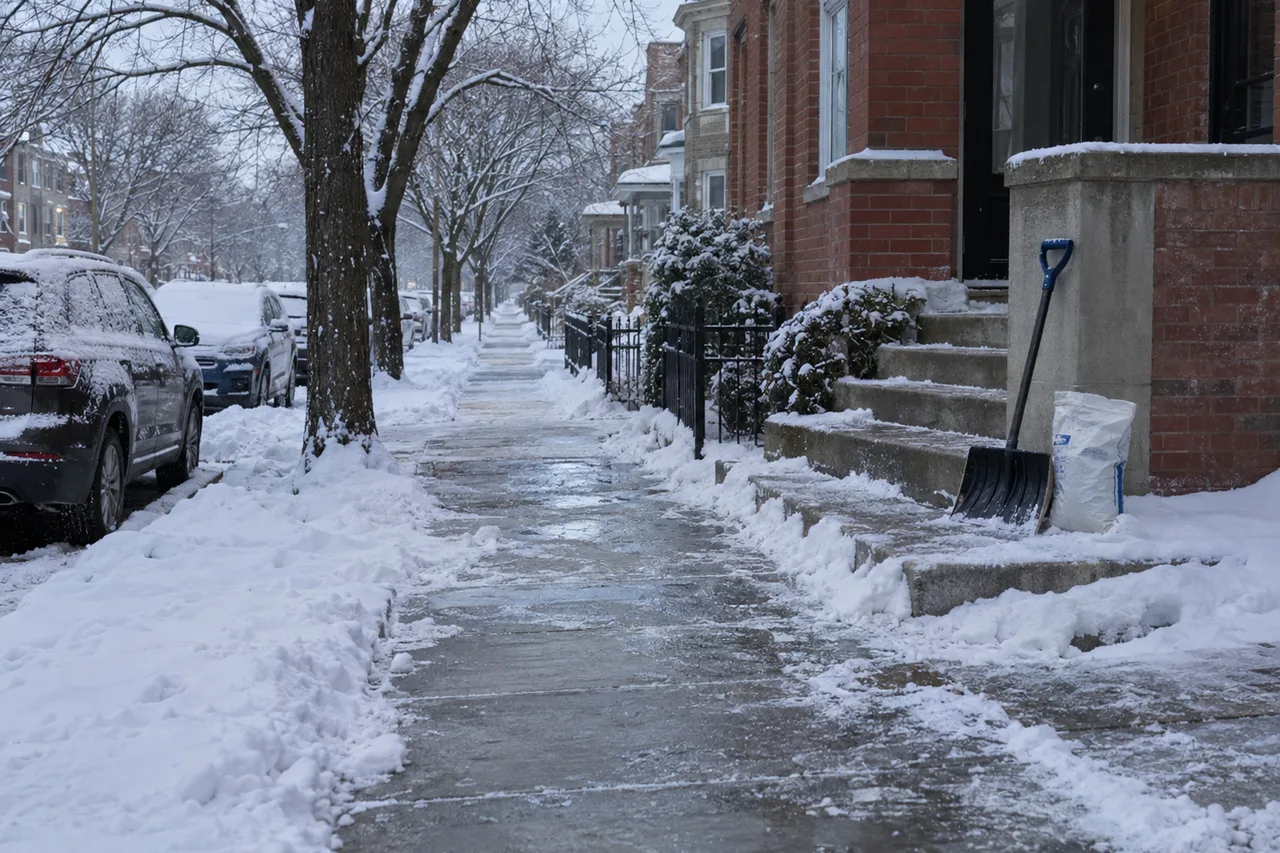
Quick answer: In Illinois, a homeowner or renter who shovels the public sidewalk in front of their home in good faith is generally not liable if someone later slips there, thanks to the Illinois Snow and Ice Removal Act. Your own steps, porch, walkway, and driveway are different: you can be liable for ice that forms because of something on your property, like a downspout draining across the path. If a guest or passerby is hurt, the liability and medical payments coverage on your homeowners, condo, or renters policy is what responds.
Every winter we get the same calls at our Bucktown office: a mail carrier fell on the front steps, a neighbor slipped by the gangway, a tenant wants to know who was supposed to salt. Chicago's freeze-thaw cycles make ice a near-daily problem from December through March. This guide explains the rules, where your responsibility starts and stops, and how your insurance fits in. For the property side of winter, see our guide to preparing your Chicago home for freezing weather.
Chicago's Sidewalk Snow Removal Rules
Under the Municipal Code of Chicago (sections 4-4-310 and 10-8-180), owners and occupants of a building, residential or commercial, must clear snow and ice from the sidewalk next to their property and from the sidewalk ramps at the corner, leaving a clear path at least 5 feet wide.
| When the snow falls | Clear the sidewalk by |
|---|---|
| 7 a.m. to 7 p.m. | 10 p.m. the same day |
| 7 p.m. to 7 a.m. | 10 a.m. |
| Ice you can't remove | Spread salt or sand right away |
The rules apply seven days a week, including holidays. Neighbors can report unshoveled sidewalks to 311, and fines run $50 to $500, with each day counted as a separate offense. Suburbs like Evanston, Oak Park, and Park Ridge set their own deadlines, so check with your village.
The Illinois Snow and Ice Removal Act
Illinois law intentionally protects people who shovel. The Snow and Ice Removal Act (745 ILCS 75) says that an owner, landlord, occupant, or anyone they hire who removes or tries to remove snow and ice from the sidewalk next to a residential property is not liable for injuries caused by the snowy or icy condition of that sidewalk, unless their conduct was willful or wanton.
What that means in practice:
- It covers residential property. Houses, two-flats, condo buildings, and apartment buildings. It does not cover stores, offices, or restaurants.
- It covers the sidewalk next to the property. Courts have generally read it as the public sidewalk, not your private front steps, porch, walkway, or driveway.
- It protects good-faith effort. A patchy shoveling job is protected. Deliberately creating a hazard, or ignoring a known danger you made worse, may not be.
- It applies to renters and helpers too. A tenant, a neighbor, or the teenager down the block you pay to shovel get the same protection.
Your Steps, Walkway, and Driveway: Natural vs. Unnatural Accumulation
Off the public sidewalk, Illinois follows what is known as the natural accumulation rule. A property owner generally has no duty to remove snow and ice that falls and builds up naturally. Liability usually arises when the owner caused or added to the hazard, for example:
- A downspout or gutter that drains across the front walk or gangway and refreezes
- A leaking gutter or ice dam dripping onto the steps
- Snow piled at the top of a slope where it melts across a path at night
- Broken concrete, a missing handrail, or a dark entryway that makes ice harder to see
- Shoveling that leaves a ridge of packed snow that turns to ice
- Agreeing in a lease or contract to handle snow removal and then not doing it
Gutters and downspouts are the most common culprit we see. If you have ice dams, our post on ice dams and home insurance in Illinois explains how to deal with them before they turn into both a roof claim and a liability claim.
What Your Insurance Covers if Someone Falls
| Coverage | What it pays | Typical limit |
|---|---|---|
| Medical payments to others | A guest's medical bills, regardless of fault, often settling small claims quickly | $1,000 to $5,000 |
| Personal liability | Injuries you are legally responsible for, including lost wages and pain and suffering, plus your legal defense | $100,000 to $500,000 |
| Personal umbrella | Serious injury claims above your home liability limit | $1 million and up |
A few points that surprise people:
- Your own household is not covered. Liability and medical payments coverage are for other people. If you or a family member who lives with you falls, your health insurance pays.
- Renters have liability too. A renters insurance policy covers a tenant who is responsible for an injury, such as when the lease makes them responsible for the back stairs.
- Condo owners share the job. The association's master policy usually covers common walkways, while your HO-6 condo policy covers your unit and your own liability. See also our guide to insurance for Chicago condo boards.
- A fall can exceed your limit. A broken hip or a head injury with surgery and months off work can easily pass $300,000, especially in Cook County. Read how much umbrella insurance you need if your limit is lower than your assets.
Landlords and Two-Flat Owners
Owners of rental property get the same Snow and Ice Removal Act protection for the public sidewalk, but they face more claims on steps, back porches, and gangways that tenants and visitors use every day. Put snow removal duties in the lease in plain language: who shovels which areas, by when, and who buys the salt. If you hire a snow removal company, ask for a certificate of insurance showing general liability, and make sure your own policy is a landlord or dwelling fire policy with liability, not a standard homeowners policy on a unit you don't live in. Our guides to Chicago landlord insurance and two-flat insurance walk through the options.
Business Owners: No State Immunity
Stores, restaurants, offices, and the commercial space in mixed-use buildings are not protected by the Snow and Ice Removal Act, and customers slipping at the entrance is one of the most common winter claims for small businesses. Commercial general liability coverage, often included in a business owners policy, pays these claims. Keep a dated log of when you shoveled and salted, put mats at the door, and get a certificate of insurance from any plowing contractor. Learn more about small business insurance.
If Someone Falls on Your Property
- Make sure the person is OK and call for help if they need it.
- Take photos of the spot, the ice, the weather, and your shoveling and salt, before anything changes.
- Write down names, contact information, the time, and any witnesses.
- Don't argue about fault or promise to pay; let your insurer handle that.
- Tell your agent or insurer promptly, even if the person says they are fine. Late reporting can complicate a claim that surfaces weeks later.
Our guide on how to file a home insurance claim in Illinois covers the claim process step by step.
Your Winter Slip-and-Fall Checklist
- Buy salt, sand, and a good shovel before the first snow.
- Know your city or village sidewalk deadlines (10 a.m. and 10 p.m. in Chicago).
- Clear the full sidewalk, a 5-foot path, and the corner ramp if you have one.
- Extend downspouts so they drain away from walkways, steps, and gangways.
- Fix loose handrails, broken concrete, and burned-out porch lights.
- Pile snow where it won't melt and refreeze across a path.
- Arrange backup shoveling for when you travel over the holidays.
- Put snow removal duties in writing with tenants or your condo association.
- Get a certificate of insurance from any snow removal company you hire.
- Check your liability and medical payments limits on your home, condo, or renters policy.
- Consider a personal umbrella policy if your assets exceed your liability limit.
The Bottom Line
Shoveling is both the law in Chicago and your best protection. The Snow and Ice Removal Act protects good-faith efforts on the public sidewalk, while your steps, walkway, and driveway are on you, especially where gutters and downspouts create ice. When someone does fall, the liability on your home, condo, or renters policy, and an umbrella above it, is what keeps one icy morning from becoming a financial problem.
As an independent insurance agency in Chicago, we can review your homeowners insurance liability limits and compare umbrella insurance from multiple carriers before the snow flies. Contact Six Corners Insurance for a free winter coverage review.
Sources
- Illinois General Assembly — Snow and Ice Removal Act (745 ILCS 75)
- City of Chicago — Sidewalk Snow Removal
- Municipal Code of Chicago — 10-8-180 Snow and Ice Removal
- National Association of Insurance Commissioners — Homeowners Insurance
- Insurance Information Institute — What Is Covered by Standard Homeowners Insurance?
Frequently Asked Questions
Am I liable if someone slips on the icy sidewalk in front of my Chicago home?
Usually not for the public sidewalk, as long as you shoveled in good faith. The Illinois Snow and Ice Removal Act protects residential owners, renters, and the people they hire from liability for injuries caused by their snow and ice removal on the sidewalk next to the property, unless their conduct was willful or wanton. Your own steps, porch, walkway, and driveway are judged under ordinary premises liability rules.
Does homeowners insurance cover a slip and fall on ice?
Yes, in most cases. The personal liability part of a homeowners, condo, or renters policy pays for injuries to other people that you are legally responsible for, plus your legal defense. Medical payments to others coverage can also pay a guest’s smaller medical bills no matter who was at fault, usually up to $1,000 to $5,000.
Is it better not to shovel so I am not liable?
No. Chicago requires owners and occupants to clear the sidewalk next to their property and fines $50 to $500 per day for failing to. The Snow and Ice Removal Act was written to encourage shoveling, and a sidewalk left unshoveled for days invites fines, complaints, and the kind of claim you want to avoid.
What is an unnatural accumulation of ice in Illinois?
Illinois courts generally do not hold property owners liable for snow and ice that builds up naturally. An owner can be liable when ice forms because of something on the property, such as a downspout draining across a walkway, a leaking gutter, or snow piled where it melts and refreezes on a path.
Who is responsible for snow removal at a Chicago rental or condo building?
It depends on the lease, the condo declaration, and who controls the area. The city ordinance applies to owners and occupants alike, so landlords and tenants should put snow removal duties in writing. Condo associations usually handle common walkways and carry liability for them on the master policy.
Does the Snow and Ice Removal Act protect businesses?
No. The act covers residential property only. Stores, offices, restaurants, and mixed-use buildings rely on commercial general liability insurance, and should get a certificate of insurance from any snow removal contractor they hire.