Quick answer: To prepare a Chicago home for freezing weather, keep the heat at 55°F or higher at all times, disconnect hoses and shut off outdoor spigots, insulate pipes in basements, crawl spaces, and exterior walls, and know where your main water shut-off is. A standard Illinois homeowners policy usually covers sudden water damage from a burst pipe, but it can deny the claim if the house was left without heat, or if an empty home wasn’t shut off and drained.
Chicago winters reliably bring a few nights below zero, and older homes take the brunt of it. Think of the bungalow with a laundry sink against an outside wall, the two-flat with a vacant unit between tenants, or the frame house in Bucktown with a hose bib nobody remembered to shut off. Frozen pipes are one of the most expensive winter claims we see. State Farm reports that the average frozen-pipe and winter water claim it paid from 2024 through mid-2025 was more than $30,000, and Illinois led the country in total claim costs. Here is how to get your home ready before the first hard freeze, and how your insurance handles it if something still goes wrong.
Why Chicago Homes Are Especially at Risk
- Long, deep cold. Cold snaps off the lake can bring several days below zero in a row. In January 2019, O’Hare hit −23°F. Pipes that are fine at 25°F can freeze solid after a few nights in the single digits.
- Older construction. Many older Chicago homes have plumbing in uninsulated exterior walls, unheated enclosed porches, and crawl spaces, and drafty basements where cold air leaks in around rim joists and old windows.
- Two-flats and multi-unit buildings. One unit’s pipes often run through another unit or a shared basement. A vacant unit with the heat turned down can freeze pipes that flood the tenant below.
- Water service lines. The line that brings water from the street into your house is usually the owner’s responsibility. If it freezes or cracks underground, see our guide to service line coverage for Chicago homeowners.
How to Prepare Your Home Before the First Hard Freeze
Outside the house
- Disconnect and drain garden hoses. A hose left on the spigot traps water that can freeze back into the pipe inside the wall.
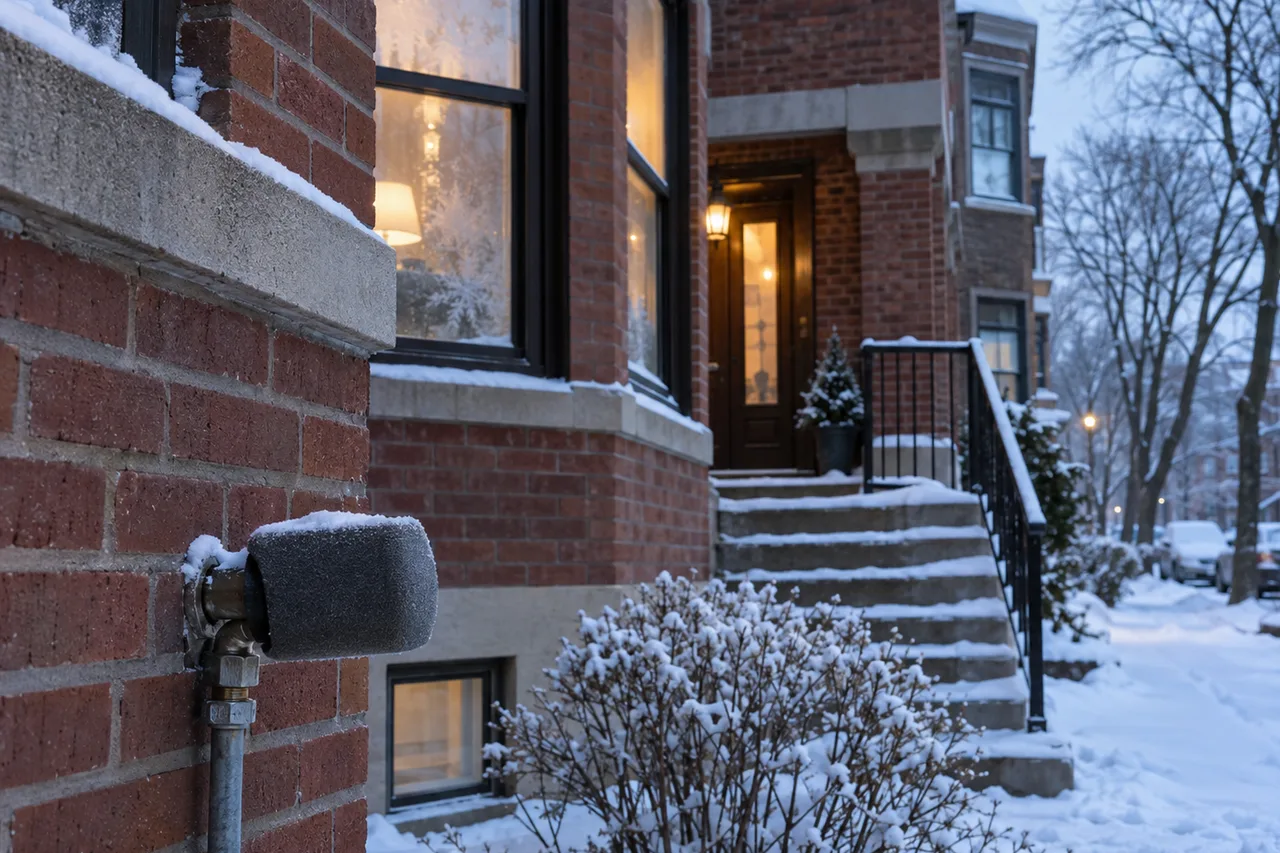
- Shut off and drain outdoor spigots. Close the indoor shut-off valve for each hose bib, then open the outside faucet to let it drain. Add an insulated foam cover for extra protection.
- Blow out sprinkler lines if you have an irrigation system.
- Check the sump pump discharge line. A frozen or clogged discharge line can send water back into the basement during a midwinter thaw. Our sump pump and sewer backup guide explains the coverage most policies leave out.
- Clean gutters and downspouts so snowmelt drains away from the foundation and doesn’t build into ice dams on the roof.
Inside the house
- Find and test your main water shut-off. Most Chicago homes have it in the basement near the water meter. Make sure everyone in the house knows where it is and that the valve actually turns.
- Insulate exposed pipes. Foam pipe sleeves are cheap and fast to install in basements, crawl spaces, garages, and under porches. For pipes that have frozen before, use a UL-listed heat cable installed to the maker’s instructions.
- Seal cold-air leaks near pipes: gaps around rim joists, dryer vents, basement windows, and where pipes and cables enter the house.
- Service the furnace or boiler. A heating system that fails on the coldest night of the year is how most frozen-pipe claims start. Replace the filter and schedule a tune-up before December.
- Add a water leak detector or automatic shut-off valve. Smart sensors near the water heater, washer, and sinks can alert your phone, and an automatic shut-off can close the main before a burst pipe floods the house. Some carriers offer a discount for them.
- Add a low-temperature alert. A smart thermostat or freeze sensor that texts you when the house drops below 50°F gives you time to act if the furnace quits while you’re away.
What to Do During a Deep Freeze
- Keep the heat at 55°F or higher, day and night. Skip the overnight setback during a cold snap.
- Open cabinet doors under kitchen and bathroom sinks on outside walls so warm air reaches the pipes.
- Let a thin trickle of cold water run from faucets on exterior walls on the coldest nights. Moving water is much less likely to freeze.
- Keep the garage door closed if water lines run through the garage.
- Never use an open flame to thaw a pipe. The Chicago Department of Water Management warns that pipes may run near gas lines. Use a hair dryer, a heating pad, or a space heater kept a safe distance away, or call a plumber.
Leaving Town This Winter? Read This First
Most of the large frozen-pipe claims we see happen while nobody is home: a holiday trip, a snowbird winter in Florida, a house for sale, or a rental unit between tenants. Before you leave:
- Leave the heat on, set no lower than 55°F.
- For longer absences, shut off the main water valve and drain the lines, and ask your plumber about draining the water heater.
- Ask a neighbor or family member to check the house every few days, and give them your agent’s number.
- Tell your agent if the home will be empty for more than a few weeks. Vacancy limits in many policies start after 30 to 60 days.
What Homeowners Insurance Usually Covers
Most Illinois homeowners carry an HO-3 policy, and some carry a broader HO-5. Both typically cover sudden and accidental water damage from a pipe that freezes and bursts, including:
- Damage to the house: drywall, ceilings, flooring, cabinets, and insulation soaked by the burst pipe, plus the cost to tear out and replace a wall or floor to reach it.
- Your belongings: furniture, rugs, electronics, and clothing damaged by the water, under personal property coverage.
- Extra living expenses: a hotel or short-term rental if the damage makes your home unlivable during repairs.
- Damage to a neighbor’s unit: in a two-flat or condo, water that reaches another unit may fall to your policy, the building’s, or theirs, depending on the cause and your agreements.
Our homeowners insurance 101 guide explains each part of a typical policy.
What Is Usually Not Covered
- Freezing in an empty home without reasonable care. Standard policies typically exclude freezing damage while a home is vacant or unoccupied unless you kept the heat on or shut off the water and drained the system.
- Slow leaks. A pipe that dripped inside a wall for months, and the mold that followed, is usually treated as a maintenance problem.
- The frozen pipe itself. Many policies pay for the water damage but not for repairing the pipe that failed.
- Groundwater and flooding. Snowmelt that seeps through the foundation is flood or seepage, not a burst pipe, and needs separate water backup or flood coverage.
For Two-Flat Owners, Landlords, Condo Owners, and Renters
Landlords: the Chicago Heat Ordinance requires rental units to be heated to at least 68°F from 8:30 a.m. to 10:30 p.m. and 66°F overnight from September 15 through June 1. Keeping heat on in vacant units protects the pipes as well as your tenants. Our guides to two-flat insurance and Chicago landlord insurance cover vacancy and water damage in more detail.
Condo owners: whether a burst pipe falls to you or the association depends on your building’s master policy. Our condo insurance (HO-6) guide explains how to match your policy to it.
Renters: the landlord’s policy covers the building, not your belongings. A renters insurance policy covers your things and extra living expenses if a burst pipe forces you out.
If a Pipe Freezes or Bursts
- If a faucet only trickles, suspect a frozen pipe. Leave the faucet open and warm the pipe gently, starting nearest the faucet.
- If a pipe bursts, shut off the main water valve right away.
- If water is near outlets, appliances, or the electrical panel, turn off power only if it is safe to do so.
- Photograph the damage and the broken pipe before cleanup.
- Start drying out: move belongings, mop up, and call a water mitigation company. Keep every receipt.
- Call your agent or insurer promptly, before major repairs.
For the full process, see our guide to filing a home insurance claim in Illinois.
Your Freezing Weather Checklist
- Disconnect hoses and shut off and drain every outdoor spigot.
- Find, label, and test your main water shut-off valve.
- Insulate pipes in basements, crawl spaces, garages, and exterior walls.
- Seal drafts near pipes and around basement windows and rim joists.
- Schedule a furnace or boiler tune-up and replace the filter.
- Install leak detectors and a low-temperature alert.
- Plan heat and water for any trip, vacant unit, or empty house.
- Check your deductible and whether you have water backup coverage.
- Confirm your dwelling limit reflects today’s rebuilding costs.
- Save your agent’s and insurer’s claim numbers in your phone.
For the rest of your cold-weather list, from furnace safety to gutters, see our winter prep tips, and check whether your home is underinsured before a big claim tests it.
The Bottom Line
A burst pipe is one of the costliest things that can happen to a Chicago home in winter, and most of them are preventable with an afternoon of work in November. Your homeowners policy is there for the sudden damage, but how the claim plays out depends on the heat being on, the water being off in an empty house, and the right coverage being in place before the cold arrives.
As an independent insurance agency in Chicago, we compare homeowners insurance from multiple carriers and can show you how each handles water damage, vacancy, and deductibles. Contact Six Corners Insurance for a free policy review before the first deep freeze.
Sources
- Illinois Department of Insurance — Homeowner and Renter Shopping Tips
- National Association of Insurance Commissioners — Will My Homeowners Policy Cover Water Damage From a Burst Pipe?
- City of Chicago Department of Water Management — Freezing Pipes Tips (PDF)
- City of Chicago — Chicago Heat Ordinance
- American Red Cross — Preventing and Thawing Frozen Pipes
- State Farm — Frozen Pipe and Winter Water Damage Claims Data (2026)
Frequently Asked Questions
Does homeowners insurance cover frozen pipes in Illinois?
Usually, yes, for the sudden water damage a burst pipe causes, such as soaked drywall, flooring, ceilings, and belongings. Coverage can be denied or limited if the home was left without heat, the water was not shut off and drained in an empty house, or the pipe had been leaking slowly for a long time.
What temperature should I keep my house at to stop pipes freezing?
The American Red Cross recommends keeping the heat set no lower than 55°F, even when you are away. In a cold snap, keep the heat steady day and night rather than turning it down while you sleep.
Should I let my faucets drip when it is below freezing in Chicago?
On the coldest nights, letting a thin trickle of cold water run from a faucet on an outside wall keeps water moving and relieves pressure in the line. The Chicago Department of Water Management shares guidance on when trickling makes sense. It is most useful for pipes that have frozen before or run through cold spaces.
Does insurance cover frozen pipes in a vacant home or a vacant rental unit?
Only if you took reasonable care. Standard homeowners policies typically exclude freezing damage while a home is vacant or unoccupied unless you kept the heat on or shut off the water and drained the system. Many policies also limit coverage once a home has been vacant for a set period, often 30 to 60 days, so tell your agent before a home or unit sits empty.
Will insurance pay the plumber to fix the frozen pipe itself?
Often not. Policies generally pay for the water damage, and for tearing out and replacing the wall or floor to reach the pipe, but not always for repairing the pipe that froze. Check your policy wording or ask your agent.