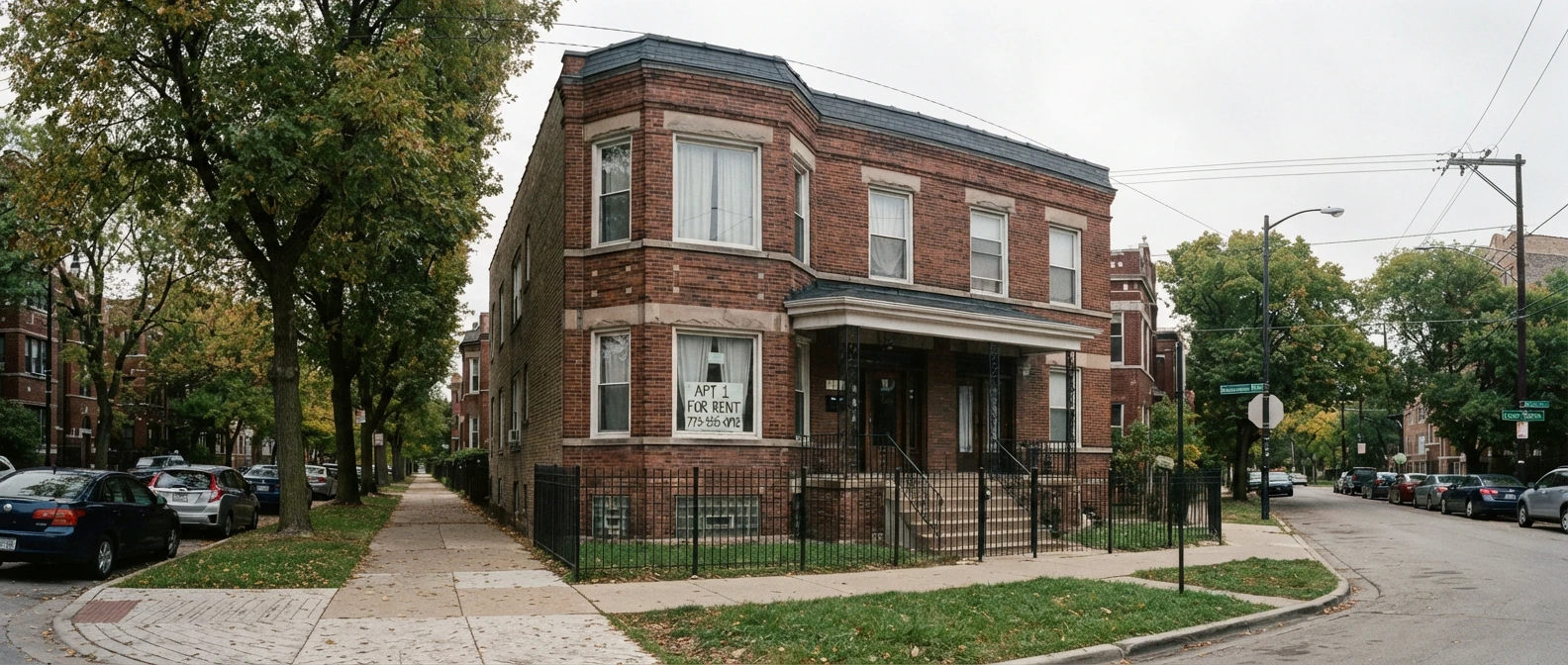
Quick answer: If you rent out a Wicker Park building, unit, or condo, the policy should be built for rental property — not simply left on a personal homeowners form. Wicker Park landlord insurance may need to protect the building, lost rent, owner-owned contents, premises liability, water backup, underground service lines, and code-upgrade costs. The right policy depends on whether you live in one unit, rent the whole property, offer short-term stays, or operate a mixed-use building.
Wicker Park landlords deal with a distinctive mix of Chicago property: brick two-flats and three-flats, greystones, vintage courtyard buildings, condo units used as rentals, basement spaces, and properties close to busy commercial corridors. Those buildings can be valuable rental assets, but they do not all fit the same insurance form.
This guide breaks down the coverage questions to ask before buying a Wicker Park rental property, moving out of an owner-occupied two-flat, renewing a landlord policy, or adding a tenant.
What Is Wicker Park Landlord Insurance?
Landlord insurance is coverage designed for an owner who rents a residential property to someone else. Depending on the carrier and property, it may be written as a rental dwelling or dwelling fire policy. It is different from homeowners insurance because the building is being used as a rental and the owner has a different liability and income exposure.
A landlord policy commonly addresses four core areas:
- The rental building. Coverage for covered damage to the structure, attached features, and eligible other structures, based on the policy limit and form.
- Lost rent or fair rental value. Potential replacement for rental income when a covered loss makes a unit uninhabitable, subject to the policy limit and time period.
- Landlord liability. Protection for covered claims alleging that the owner was responsible for injury or property damage at the premises.
- Owner-owned contents. Appliances, maintenance equipment, furnishings, or other property the owner supplies for the rental may need to be addressed separately.
The details vary by insurer. The important first step is making sure the carrier knows the actual use of the property instead of assuming a personal homeowners policy follows the building into a rental.
Do I Need Landlord Insurance for a Wicker Park Two-Flat?
Start with occupancy. An owner-occupied two-flat, a fully tenant-occupied two-flat, and a two-flat used for short-term stays can require different underwriting and policy forms.
Tell your agent which of these describes the building:
- You live in one unit and rent the other to a long-term tenant.
- You live somewhere else and rent both units.
- One unit is vacant while you renovate or look for a tenant.
- A unit is furnished or offered for short-term or mid-term stays.
- The ground floor includes a storefront, office, studio, or other commercial use.
If you move out of your Wicker Park two-flat and rent your former unit, notify the insurer before the occupancy changes. A policy that was appropriate while you lived in the building may not be appropriate once tenants occupy the entire property. Our guide to owner-occupied versus landlord coverage for Chicago two-flats explains the distinction in more detail.
What Does a Wicker Park Landlord Policy Cover?
1. Building replacement cost
The purchase price, assessed value, and market value of a Wicker Park rental are not the same as its reconstruction cost. A replacement-cost estimate should account for the structure, labor, demolition, permits, masonry, plaster, millwork, roofing, and other materials needed to repair or rebuild after a covered loss.
Older Chicago brick buildings can be expensive to restore because matching existing materials and meeting current construction requirements may cost more than a basic square-foot estimate suggests. Ask how the dwelling limit was calculated and when it should be updated.
2. Loss of rent or fair rental value
A fire, major water loss, or other covered event can make a unit uninhabitable while repairs continue. The building may still have a mortgage, utilities, taxes, and maintenance expenses even when rent stops.
Review:
- Whether the policy covers lost rent, fair rental value, or both
- Which causes of loss trigger the coverage
- The waiting period and maximum payment period
- Whether the limit reflects current Wicker Park rents and the number of units
- How a partially occupied building is handled after a loss
3. Premises liability
Landlord liability can involve a tenant, a tenant's guest, a delivery person, a contractor, or someone injured in a common area. Wicker Park properties may include front steps, porches, rear decks, basement stairs, shared hallways, sidewalks, and alleys that need regular attention.
The right liability limit depends on the property, your assets, your ownership structure, and your broader insurance program. If you are considering a personal or landlord umbrella, ask whether the rental property is eligible and how the underlying liability limits must be set.
4. Water backup and sewer coverage
Water damage is not one single insurance problem. Water or sewage backing up through a drain or sump system may require water-backup coverage. A failed buried sewer or water line may involve service-line coverage for excavation and repair. Surface flooding is a separate exposure from both.
For a Wicker Park property with a basement, garden unit, laundry room, or finished lower level, review the endorsement limit and deductible instead of assuming the main building limit handles every water scenario. See our guides to Illinois sump pump and sewer backup coverage and Chicago service-line coverage.
5. Ordinance or law coverage
A covered loss to an older building can trigger code-related work during repair or reconstruction. Ordinance or law coverage may help with certain increased costs when a covered claim requires compliance with current building requirements. Ask whether the limit is adequate for the property and whether important portions of the building are subject to special sublimits.
6. Owner-owned appliances and equipment
If you provide refrigerators, ranges, laundry equipment, window units, furnishings, lawn equipment, or maintenance tools, ask where that property is insured. Create a simple inventory with photos, receipts, and serial numbers for expensive items.
Does Landlord Insurance Cover a Tenant's Belongings?
No. A landlord policy generally protects the building and the owner's insured property. It does not replace a tenant's furniture, clothing, electronics, bicycles, or other personal property after a covered loss.
Tenants need renters insurance for their belongings and personal liability. Owners can communicate that requirement in the lease, but the owner's landlord policy and the tenant's renters policy are separate contracts. Our Chicago renters insurance guide explains what a tenant policy is designed to cover.
What If the Wicker Park Property Is a Condo?
A rented condo unit has a different insurance conversation from a detached rental home or two-flat. The condominium association's master policy may cover portions of the building, while the unit owner may still need coverage for interior improvements, owner-owned appliances, liability, lost rental income, and other property interests.
Before quoting a rental condo, gather the association's insurance certificate, declaration pages if available, bylaws, unit-owner responsibilities, and any lease or building requirements. Do not assume the association's master policy covers everything inside the unit or protects you from a tenant-related liability claim.
What If the Building Is Mixed-Use?
Wicker Park has residential buildings near restaurants, shops, offices, studios, and other commercial activity. If the property includes a storefront, office, salon, restaurant, warehouse, or another non-residential use, say so at the start of the quote.
A mixed-use or five-plus-unit building may need commercial property insurance, a business owners policy, or a specialty program rather than a standard residential landlord form. The occupancy, tenant business, cooking equipment, foot traffic, lease responsibilities, and building systems can change the risk substantially. Our commercial property insurance page outlines the next step for owners with a business or mixed-use exposure.
How Is Landlord Insurance Priced in Wicker Park?
Carriers evaluate the property and the owner, not just the neighborhood name. A quote can change based on:
- Building age, construction, square footage, and number of units
- Roof age and updates to plumbing, electrical, heating, and windows
- Replacement-cost estimate and selected deductibles
- Monthly rent, lease type, and whether the units are furnished
- Owner occupancy, tenant occupancy, vacancy, or renovation status
- Short-term rental, mid-term rental, or other non-standard use
- Prior claims and the owner's broader rental-property history
- Liability limits, umbrella coverage, alarms, sprinklers, and other protective features
That is why a cheap Wicker Park landlord insurance quote can be misleading if it uses a lower building limit, excludes water backup, omits lost rent, or assumes a different occupancy. Compare the coverage form and limits, not just the monthly premium.
Common Wicker Park Rental Property Scenarios
| Property situation | Coverage questions to ask |
|---|---|
| Owner lives in one unit of a two-flat and rents the other | Does the policy reflect owner occupancy, rental income, the second unit, and landlord liability? |
| Both units are rented to long-term tenants | Is the building insured as a rental property with adequate building, lost-rent, and liability limits? |
| A condo is rented to a tenant | Where do interior improvements, owner appliances, loss of rent, liability, and the association deductible fit? |
| A tenant moves out and the property is vacant | What vacancy period changes coverage, and is a vacancy endorsement or different policy needed? |
| A garden unit or basement is used by a tenant | Are water backup, sump-pump overflow, contents, habitability, and legal use clearly addressed? |
| A storefront or office occupies the first floor | Does the property need commercial or mixed-use coverage instead of residential landlord insurance? |
| A unit is offered through a short-term rental platform | Has the activity been disclosed, and does the policy specifically allow paying guests and the rental frequency? |
When Should a Wicker Park Landlord Update the Policy?
Contact your agent before any change that affects how the property is used or maintained:
- You move out of an owner-occupied two-flat.
- You add or remove a rental unit.
- You begin a short-term or furnished rental.
- You renovate the kitchen, roof, electrical, plumbing, or structure.
- You leave the building vacant between tenants.
- You transfer ownership to an LLC, trust, or other entity.
- You add a storefront, office, or business use.
- Your rent, building value, or liability exposure changes materially.
Keeping the policy synchronized with the property is especially important at renewal. If the premium jumps or the carrier changes its underwriting terms, an independent agent can compare the same building with other available rental-property markets. Our Chicago landlord insurance guide covers the broader policy structure, while this Wicker Park guide focuses on local property and occupancy questions.
The Bottom Line for Wicker Park Landlords
The best landlord insurance for a Wicker Park rental property is not simply the cheapest quote. It is a policy that matches the building's actual occupancy and protects the owner's real exposure: replacement cost, lost rent, premises liability, owner-owned contents, water backup, service lines, code-related costs, and vacancy or short-term-rental changes.
Six Corners Insurance helps Wicker Park and Chicago-area landlords compare rental-property coverage across multiple carriers. Send us your current declarations page or the property details, and we will review the policy line by line. Request a free landlord insurance comparison, or call or text us at (312) 651-6759.
Sources
Frequently Asked Questions
How much does landlord insurance cost in Wicker Park?
There is no single Wicker Park landlord insurance rate. Premium depends on the building’s age, construction, replacement cost, number of units, rental income, occupancy, roof and system updates, claims history, liability limits, and selected endorsements. Comparing multiple carriers is the best way to find a competitive policy for the actual property.
Do I need landlord insurance for a Wicker Park two-flat?
If you rent one or both units, tell your agent before the tenant moves in. The right policy depends on whether you live in one unit, rent the whole building, use short-term rentals, or have another occupancy arrangement. A standard homeowners policy may not match a fully tenant-occupied rental.
Does Wicker Park landlord insurance cover lost rent?
Many rental dwelling and landlord policies can cover lost rental income or fair rental value after a covered loss makes a unit uninhabitable. The covered causes, limit, waiting period, and payment period are policy-specific, so review them before a claim.
Does landlord insurance cover my tenant’s belongings?
No. A landlord policy generally protects the building and the owner’s insured property, not a tenant’s furniture, clothing, electronics, or other personal belongings. Tenants need their own renters insurance.
What insurance does a Wicker Park mixed-use building need?
A building with residential units and a storefront, office, restaurant, or other commercial space may need commercial property or another specialized policy rather than a standard rental dwelling form. Tell the agent about every use before requesting a quote.