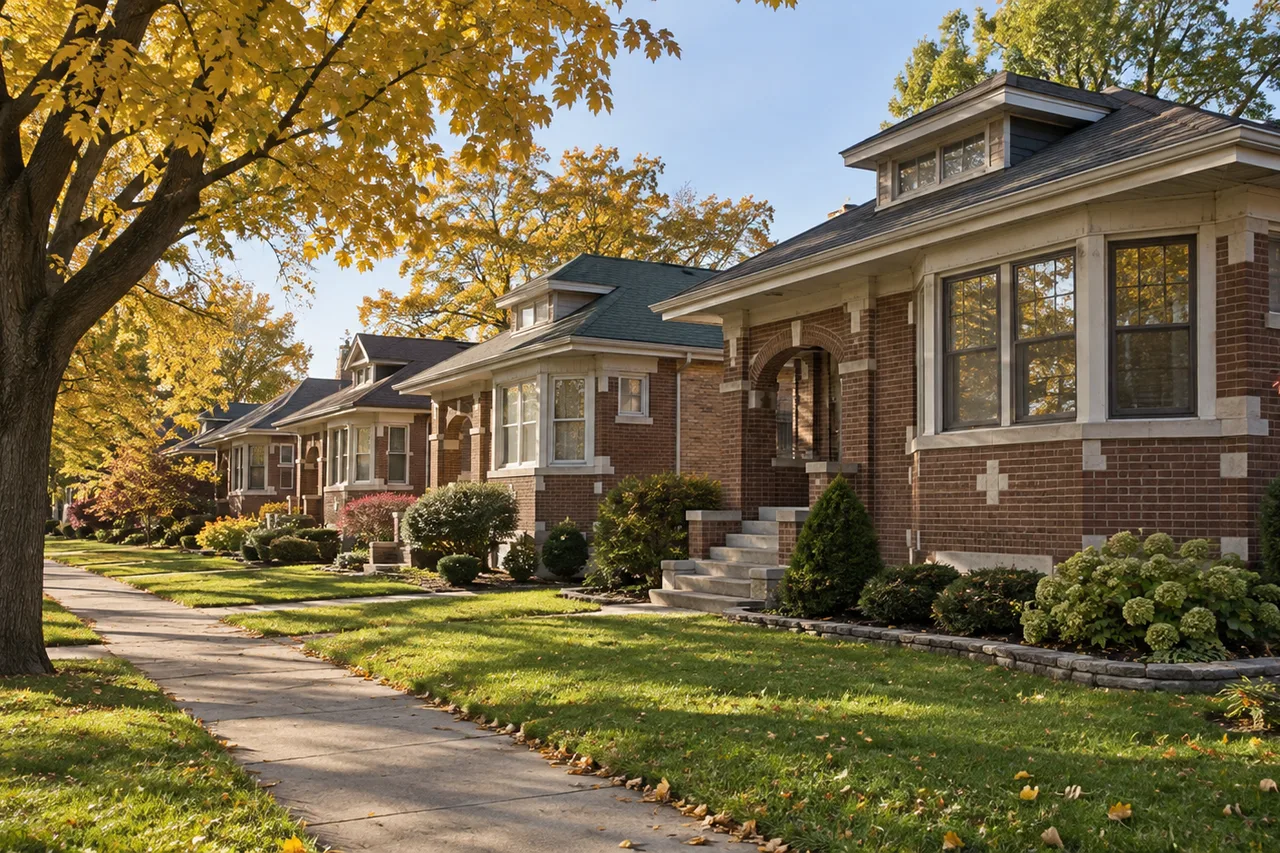
Quick answer: Most homes in Portage Park, Jefferson Park, and Irving Park are brick bungalows and two-flats built roughly a century ago. Insure them for what it would cost to rebuild solid masonry and original details, add water backup coverage sized for a finished basement, document updates to wiring, plumbing, and the roof, and review ordinance or law coverage, especially in Irving Park's Villa District.
Our agency is named after Six Corners, the intersection of Irving Park Road, Cicero Avenue, and Milwaukee Avenue at the heart of Portage Park. For decades it was the biggest shopping district in Chicago outside the Loop, and the blocks around it are some of the most solid, well-kept residential streets in the city. This is the guide we would give a neighbor.
The Bungalow Belt and What It Means for Coverage
The Northwest Side is the heart of Chicago's Bungalow Belt. Most of the homes here went up between about 1910 and 1940, and the housing mix is consistent from block to block:
- Classic brick bungalows with limestone trim, front bay windows, art glass, and a full basement, often finished.
- Brick two-flats where the owner lives in one unit and rents the other, or where family members share the building.
- Raised ranches and Cape Cods from the 1940s and 1950s, especially toward the northwest edge of Jefferson Park.
- Victorian frame homes and foursquares in Old Irving Park, some of the oldest houses on the Northwest Side.
Each of these insures a little differently, but they share a few themes: older systems, below-grade living space, and construction that costs more to replace than it looks.
1. Insure the Bungalow to Rebuild, Not to Resell
A bungalow's sale price includes the lot and the neighborhood. Its rebuild cost is about labor and materials, and solid brick walls, limestone sills, plaster, oak trim, and leaded art glass windows are not cheap to recreate. We regularly see bungalows where the dwelling limit was simply carried over from the last owner or set to the mortgage amount.
Ask for a fresh replacement cost estimate that counts the finished basement, any dormer or attic build-out, and the real materials. Our guides on being underinsured for rebuilding costs and insuring older Chicago homes explain how carriers value houses like these.
2. Irving Park's Villa District: Ask About Ordinance or Law
The Villa District, on the 3600 through 3800 blocks of North Avers, Hamlin, Harding, and Springfield, was designated a Chicago Landmark District in 1983. Its homes were built largely between 1907 and 1925 in the Prairie and Craftsman styles, back when the subdivision required every house to be built in the "bungalow mode."
Exterior work there generally goes through review by the Commission on Chicago Landmarks. After a fire or major loss, a rebuild may need to match original materials and still meet today's building codes. Ordinance or law coverage helps pay the extra cost of bringing a damaged home up to code, and it is worth reviewing on any Northwest Side home, landmark or not.
3. Finished Basements Need Water Backup Coverage
If there is one claim we see most often around Six Corners, it is water in the basement after a heavy storm. Chicago has a combined sewer system, and when it fills up during intense rain, water can back up through floor drains into the lowest level of the home. In a bungalow that is often a family room, laundry, a guest bedroom, or a garden unit.
- Water backup is usually excluded from a standard homeowners policy. You add it with an endorsement, and limits like $5,000 or $10,000 rarely cover a finished basement.
- Flood is separate. Water coming in from outside, like surface water through a window well, needs a flood policy.
- Prevention helps. A backflow valve, an overhead sewer conversion, or a sump pump with battery backup can reduce the risk, and some carriers give credit for them.
We cover this in more depth in our guides to basement water damage and sump pump and sewer backup coverage in Illinois.
4. Old Sewer and Water Lines Under the Parkway
Many Northwest Side homes still have their original clay sewer lateral running out to the street, and parkway tree roots love to find their way into it. Repairing or replacing a failed line can mean digging up the yard and parkway, and a standard policy typically excludes it. Service line coverage is an inexpensive endorsement that can pay for that repair.
5. Document Wiring, Plumbing, and Roof Updates
Carriers price older homes based on the age and condition of their systems. Knob-and-tube wiring, fuse boxes, galvanized supply pipes, and an aging roof can limit which companies will quote, or push the price up. If your bungalow has been updated, gather the years and receipts for the electrical panel, plumbing, roof, and furnace. The carrier that sees that documentation is usually the one that quotes best.
Many bungalow owners have also made energy upgrades through programs connected to the Historic Chicago Bungalow Association. New windows, insulation, or mechanicals are worth mentioning to your agent too.
6. Two-Flat Owners: Get the Policy Type Right
A two-flat where you live in one unit and rent the other is not insured the same way as a single-family home, and it is not the same as a purely investment property either. Your tenant also needs their own renters policy for their belongings. Our two-flat insurance guide walks through owner-occupied and landlord coverage, and our Chicago landlord insurance guide covers buildings you do not live in.
7. Garages, Alleys, and Auto Coverage
Most bungalows have a detached garage off the alley. It is covered under the "other structures" part of your policy, usually at 10% of the dwelling limit, which is often enough but worth checking if you have rebuilt the garage or store expensive tools, bikes, or equipment there.
On the auto side, the Northwest Side is a commuter area, with the Blue Line, the Kennedy, and the Edens all close by. Keep comprehensive coverage for theft and storm damage, and quote your car insurance together with your home. A home and auto bundle is often the simplest way to save.
8. Liability and Umbrella Coverage
Front stoops, icy sidewalks, backyard gatherings, and a teen driver in the house all add liability exposure. Many families here choose higher liability limits on their home and auto policies and add a personal umbrella policy, which is usually inexpensive for the extra protection it adds.
Northwest Side Home Insurance Checklist
- Confirm the dwelling limit reflects the cost to rebuild your bungalow or two-flat.
- Include the finished basement and any attic build-out in that estimate.
- Add water backup coverage with a limit that fits your basement.
- Consider flood insurance if water can reach window wells or doors.
- Add service line coverage for the sewer and water lines to the street.
- Review ordinance or law coverage, especially in the Villa District.
- Gather update years for the roof, electrical, plumbing, and furnace.
- Two-flat owners: confirm the policy type and require renters insurance from tenants.
- Check the other structures limit for your garage.
- Quote home and auto together and review your liability limits.
The Bottom Line
Portage Park, Jefferson Park, and Irving Park homes are built to last, but a hundred-year-old brick bungalow with a finished basement has specific insurance needs. A quick review of your rebuild cost, water backup limit, and system updates closes the gaps we see most often on the Northwest Side. For other neighborhoods, see our guides to Logan Square, Bucktown, and Lincoln Park. Buying your first home in the area? Start with our first-time home buyer guide.
As an independent insurance agency in Chicago, we compare coverage from multiple carriers and go through your policy with you line by line. Learn about our homeowners insurance or contact Six Corners Insurance for a free policy review.
Sources
- City of Chicago — Villa District (Chicago Landmarks)
- City of Chicago — Historic Chicago Bungalow Initiative
- City of Chicago — Blocking Rainwater and Preventing Sewer Backup
- Illinois Department of Insurance — Homeowners & Renters Shopping Tips
- National Association of Insurance Commissioners — Homeowners Insurance
Frequently Asked Questions
How much homeowners insurance do I need for a Chicago bungalow?
Enough to rebuild the home, not what you paid for it. Brick bungalows in Portage Park, Jefferson Park, and Irving Park have solid masonry walls, limestone trim, and often art glass windows and original woodwork, which cost more to replace than standard new construction. Ask for a replacement cost estimate based on the home’s real square footage, finished basement, and materials.
Does homeowners insurance cover basement flooding in Portage Park or Jefferson Park?
A standard homeowners policy usually excludes water that backs up through a floor drain or sewer line. You need a water backup endorsement for that, and flood insurance for surface water coming in from outside. Many Northwest Side bungalows have finished basements, so we recommend choosing a water backup limit that would actually cover the finishes and belongings down there.
Does living in the Villa District affect my insurance?
It can. The Villa District in Irving Park is a Chicago Landmark District, so exterior work generally goes through city landmark review. Matching original details after a loss and meeting current building codes can raise rebuilding costs, so review your dwelling limit and ordinance or law coverage.
Is my bungalow’s old wiring or plumbing a problem for insurers?
It can affect which carriers will write the policy and what they charge. Knob-and-tube wiring, old fuse panels, and galvanized plumbing are the usual concerns. If those systems have been updated, keep the receipts and permits and share the years with your agent. Documented updates often lead to better quotes.
Should I bundle home and auto insurance on the Northwest Side?
Usually it is worth quoting both together. Most carriers give a multi-policy discount, and an independent agent can compare bundles from several companies side by side and tell you when keeping them separate is actually cheaper.