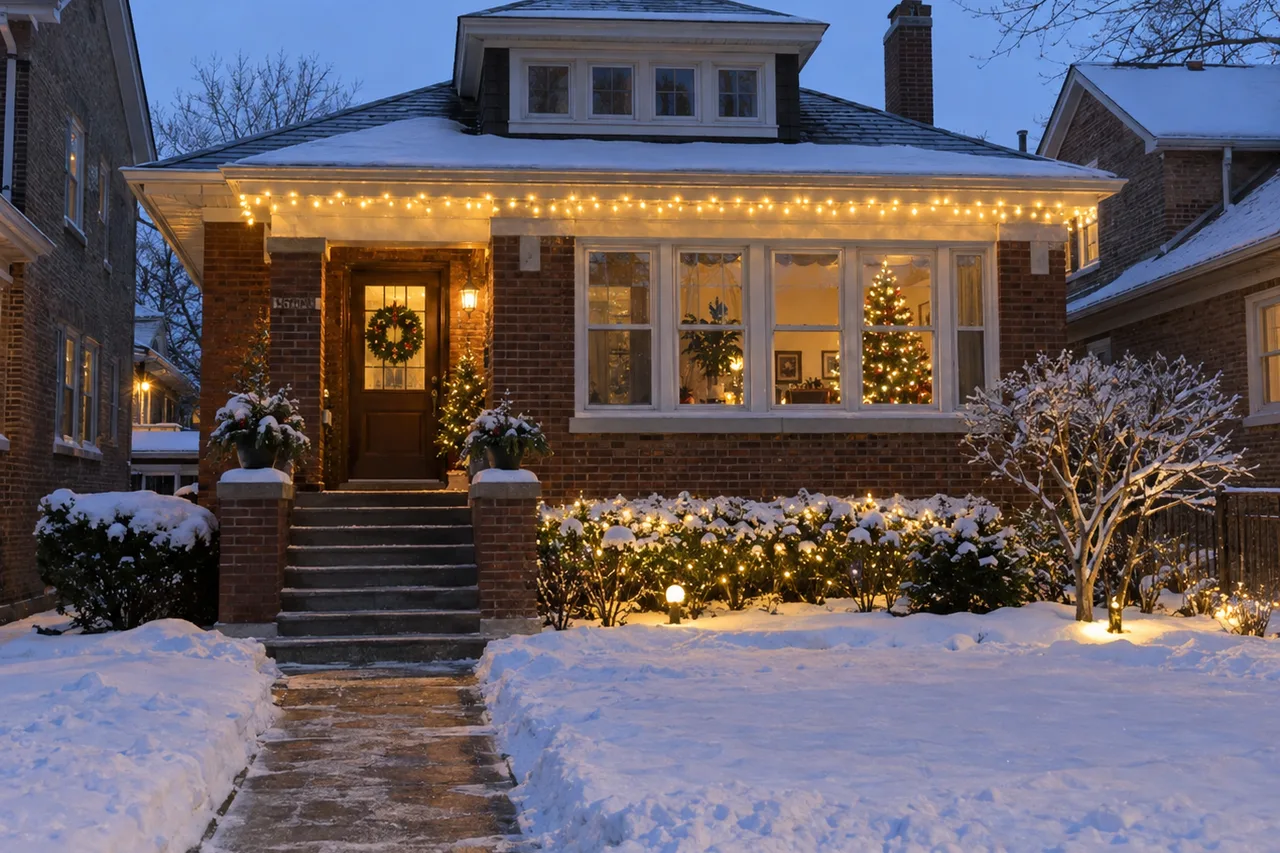
Quick answer: The best insurance moves for Chicagoland in December 2026 are to prevent holiday fires from trees, candles, and space heaters, test your smoke and carbon monoxide alarms, check your liability limits before holiday parties, schedule valuable gifts like engagement rings on your policy, protect your home and car while you travel, and review any policy that renews on January 1 while you still have time to compare quotes.
December is the busiest month of the year in most Chicago homes. The tree goes up, the furnace runs nonstop, packages pile up on the porch, family comes to town, and the city's overnight winter parking ban starts on December 1. Picking up where our November insurance tips left off, these are the December tips we give clients from our Bucktown office to Portage Park and the suburbs.
1. Christmas Trees, Lights, and Candles: Prevent a Holiday Fire
The National Fire Protection Association reports that candle fires peak in December and January, and that almost half of home Christmas tree fires start in the living room. A few habits prevent most of them:
- Water a real tree every day. A dry tree catches fire fast. Keep it at least three feet from radiators, space heaters, fireplaces, and candles, and take it down soon after the holidays.
- Check your lights. Throw out strings with frayed wires or broken sockets, use outdoor-rated lights and cords outside, and turn everything off when you go to bed or leave the house.
- Never leave candles burning in an empty room, and keep them away from trees, garland, and curtains. Battery candles look nearly the same.
Accidental fire is a covered peril on standard homeowners, condo, and renters policies, including extra living expenses if you can't stay in the home during repairs. What catches people out is a limit that is too low. Our guide to being underinsured for rebuilding costs explains how to check yours, and homeowners insurance 101 covers how the parts of a policy work together.
2. Space Heaters, Furnaces, and Carbon Monoxide
Nearly half of home heating equipment fires happen between December and February, according to the NFPA. In older Chicago bungalows and two-flats with drafty rooms, space heaters are a big part of that.
- Keep space heaters three feet from anything that can burn, and plug them straight into the wall, not a power strip.
- Turn them off when you leave the room or go to sleep.
- Have the furnace serviced if you didn't in the fall, and keep vents clear of snow.
- Test smoke and carbon monoxide alarms. Illinois law requires a working carbon monoxide alarm within 15 feet of every room used for sleeping in homes with a fuel-burning heat source or an attached garage.
Landlords and two-flat owners are responsible for those alarms in their units; our Chicago landlord insurance guide and two-flat insurance guide cover the liability side.
3. Holiday Parties: Check Your Liability Limits
Holiday parties bring the same risks as Thanksgiving, more often: a guest who slips on icy steps, a dog that bites, or a guest who drinks too much. The personal liability part of your homeowners, condo, or renters policy usually covers guests hurt at your home, but many policies still carry $100,000 or $300,000 limits.
- Salt and light your steps, walkway, and driveway before guests arrive. Our guide to slip-and-fall liability on icy Chicago sidewalks explains where the Illinois Snow and Ice Removal Act protects you and where it doesn't.
- Keep pets in a quiet room while guests come and go.
- Never serve alcohol to anyone under 21. Illinois courts generally don't hold hosts liable for adult guests, but an adult who supplies alcohol to someone under 18 can be sued under the Drug or Alcohol Impaired Minor Responsibility Act.
- Consider raising liability to $500,000 or adding a personal umbrella policy. Our guide to how much umbrella insurance you need in Illinois walks through the limits.
Hosting the office party? A business event is generally not covered by your homeowners policy. Business owners should check their general liability insurance and ask whether host liquor liability is included, especially for an event at a rented venue.
4. Engagement Rings and Big Gifts: Schedule Them
December is one of the most popular months of the year to get engaged, and it is when expensive gifts come into the house. Most standard homeowners and renters policies cap theft of jewelry, watches, and furs at a low amount, often $1,500 or less, and don't cover simply losing a stone or a ring.
- Schedule it. A scheduled personal property rider covers a ring, watch, camera, or instrument for its appraised value, usually including loss. Add it right away with the receipt or an appraisal. Our guides to home insurance riders and protecting your holiday treasures explain how.
- E-bikes and scooters: many homeowners policies limit or exclude motorized vehicles, and some treat e-bikes that way. Ask before the gift is unwrapped. Our guide to insuring bikes, boats, and ATVs covers the gaps.
- A new car for a new driver? Call your agent before the keys change hands. Our guide for teen drivers in the Midwest covers how to keep the premium down.
5. Package Theft at Peak Shipping Season
Stolen packages are usually covered under the personal property part of a homeowners or renters policy, but most cost less than a $500 or $1,000 deductible, and a claim can follow you at renewal. Use a lockbox or a pickup point, require a signature for expensive items, and call the retailer or carrier first. Save insurance claims for larger losses; our guide on how to file a home insurance claim in Illinois explains when a claim makes sense.
6. The Overnight Parking Ban and Winter Driving
From December 1 through April 1, Chicago bans parking from 3 a.m. to 7 a.m. on about 107 miles of main streets, whether or not it snows, and a separate 2-inch snow ban covers hundreds more miles. A tow is not an insurance claim, so learn your routes before the first night. Leave extra following distance on the Kennedy and the Edens, and never leave a car running unattended to warm up. Our guide to winter driving and car insurance in Chicago covers ice crashes, fault, and warm-up thefts, and comprehensive vs. collision explains which coverage pays for what. On New Year's Eve, plan a ride home before the first toast.
7. Traveling for the Holidays: Protect the Empty House
A burst pipe in an empty house can run for days before anyone notices. Before you leave:
- Keep the heat at 55°F or higher and open cabinet doors under sinks on outside walls.
- Know where your main water shutoff is, or shut it off for a long trip.
- Ask someone to check the house every few days, and put lights on timers.
- Tell your agent if the home will be empty for more than a few weeks, since vacancy rules can limit coverage.
- Check that your auto coverage extends to a rental car. Our guide to rental car insurance for holiday travel covers the details.
Our guides to preparing your Chicago home for freezing weather and ice dams and home insurance cover what insurance pays when the cold wins, and sump pump and sewer backup coverage explains the water damage most policies leave out.
8. January 1 Renewals: Review Before the New Year
Many home and auto policies renew on January 1, and Illinois premiums have climbed in recent years. Read your renewal notice as soon as it arrives, and give yourself a few weeks to compare quotes:
- Confirm your dwelling limit reflects today's rebuilding costs.
- Check that water backup coverage is on the policy, with a realistic limit.
- Make sure your deductibles are amounts you could pay tomorrow.
- Tell your carrier about a new roof, alarms, or water leak sensors for discounts.
- Compare a home and auto bundle with separate policies.
- Update your home inventory with photos of this year's gifts.
Our posts on whether to bundle home and auto in Illinois, when to reshop your insurance, and Midwest home insurance rate hikes in 2026 walk through each step.
Your December Insurance Checklist
- Water the tree daily and keep it three feet from heat sources.
- Replace damaged light strings and turn decorations off at night.
- Never leave candles or space heaters running in an empty room.
- Test smoke and carbon monoxide alarms and replace batteries.
- Salt and light your steps and walkway before guests arrive.
- Review your liability limit and consider an umbrella policy.
- Schedule engagement rings, watches, and other valuable gifts.
- Ask whether e-bikes and scooters are covered before giving one.
- Have packages held or delivered to a pickup point.
- Learn your parking ban routes and pack a winter car kit.
- Keep the heat at 55°F or higher when you travel.
- Review any January 1 renewal and get a bundle quote.
The Bottom Line
The most common December gaps we find are jewelry that was never scheduled, liability limits that haven't changed in years, and renewals that go through without anyone reading them. Each is quick to fix before the holidays and expensive to discover after. When the snow piles up, our winter prep tips pick up where this checklist leaves off.
As an independent insurance agency in Chicago, we compare homeowners insurance, car insurance, and home and auto bundles from multiple carriers. Contact Six Corners Insurance for a free year-end policy review before your renewal.
Sources
- Illinois Department of Insurance — Homeowners & Renters Shopping Tips
- Illinois Department of Insurance — Auto Insurance
- Illinois General Assembly — Carbon Monoxide Alarm Detector Act (430 ILCS 135)
- Illinois General Assembly — Drug or Alcohol Impaired Minor Responsibility Act (740 ILCS 58)
- National Fire Protection Association — Winter Holiday Safety
- National Fire Protection Association — Heating Safety
- City of Chicago — Winter Snow Parking Restrictions
- National Association of Insurance Commissioners — Homeowners Insurance
Frequently Asked Questions
What insurance should Chicago homeowners review in December?
Before the holidays, check that your liability limit is high enough for parties and guests, that valuable gifts like jewelry and watches are scheduled on your policy, and that you have water backup coverage heading into the coldest weeks. If your home or auto policy renews January 1, review your dwelling limit, deductibles, and discounts now, and compare a home and auto bundle while there is still time to switch.
Does homeowners insurance cover a Christmas tree or holiday decoration fire?
Generally, yes. Accidental fire is a covered peril on standard homeowners, condo, and renters policies, including damage to the home, your belongings, and extra living expenses if you have to stay somewhere else while repairs are made. The bigger risk is that your limits are too low for a serious fire, so check your dwelling and personal property limits before the season starts.
Is an engagement ring covered by homeowners or renters insurance?
Only up to a low theft limit on most standard policies, often $1,500 or less for jewelry, and usually not for losing the stone or the ring. A scheduled personal property rider (sometimes called a floater) covers the ring for its appraised value, often with no deductible and including mysterious loss. Add it as soon as you buy the ring, using the receipt or an appraisal.
Am I liable if a guest drinks at my holiday party and causes a crash?
Illinois courts have generally not held social hosts liable for serving alcohol to adult guests. The exception is minors: under the Drug or Alcohol Impaired Minor Responsibility Act, an adult who supplies alcohol to someone under 18, or knowingly lets them drink at their home, can be sued for the injuries that follow. Even a lawsuit you win has to be defended, which is one reason higher liability limits or an umbrella policy are worth having.
Are e-bikes and scooters given as gifts covered by homeowners insurance?
It depends on the policy. Many homeowners policies limit or exclude motorized vehicles, and some treat e-bikes and e-scooters that way, so theft, damage, or an injury you cause while riding may not be covered. Ask your agent before the gift is unwrapped; some carriers offer an endorsement, and a separate e-bike or motorcycle-style policy is another option.
Do I need a carbon monoxide alarm in Illinois?
Yes. The Illinois Carbon Monoxide Alarm Detector Act requires every dwelling unit with a fossil-fuel heat source, an attached garage, or other source of carbon monoxide to have at least one working carbon monoxide alarm within 15 feet of every room used for sleeping. December, when furnaces run hardest, is a good time to test them and replace batteries.